
Real-time identity done the right way
Leverage every signal from every source to resolve identities across authenticated and unknown visitors. Build a durable and trusted identity graph that commands premium dollars wherever audiences are activated.
OPTABLE SOLUTIONS
Stop building around the ecosystem. Start building for your bottom line.

Optable simplifies interoperability by unifying fragmented data to resolve & enrich identity in real-time so you can activate audiences in the places that drive a meaningful impact on revenue and business objectives. From infrastructure to execution, we provide the flexibility and control you need to manage data across online and offline environments with confidence.
Leverage every signal from every source to resolve identities across authenticated and unknown visitors. Build a durable and trusted identity graph that commands premium dollars wherever audiences are activated.
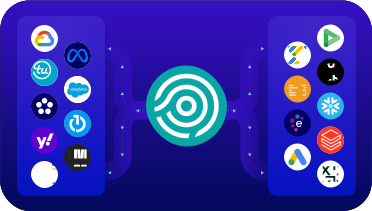
Support your operational complexity with flexible identifier scoping, batch and streaming data support, and native compatibility with 50+ sources and destinations.

Enable sub-100 millisecond recognition and event collection while activating audiences server-side without leaking data on the open web.
Identity built for enterprise scale

“Hearst relies on Optable to connect with our consumers and create addressability for our advertisers. Great features & customer support”
David Lundell, VP Identity Product Development
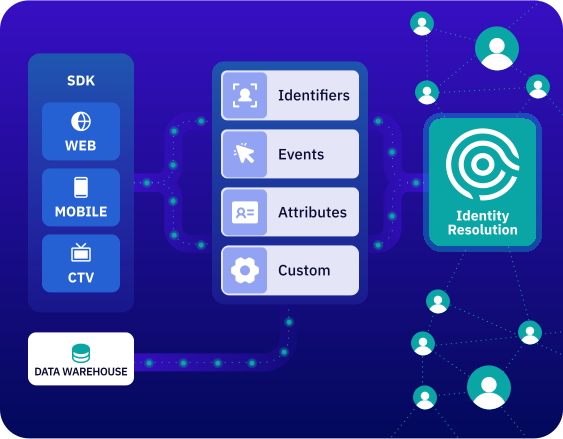
We build your identity graph based on all observed events across all integrated sources. As we witness signals from our low-latency SDK and server-side APIs, we deterministically build a rich and precise story about each visitor that fuels durable, high-fidelity identity graphs.
Empower buyers to bid more confidently and aggressively on your inventory by sending rich, accurate audience insights directly within the bidstream. Integrate effortlessly with Prebid and header bidding solutions, powering efficient, enriched data flow to every demand source
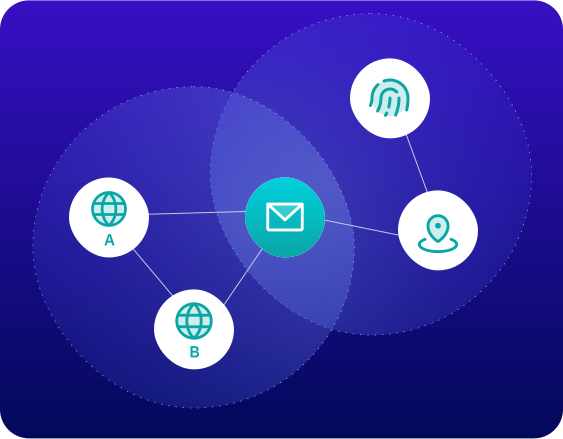
Increase the value of every impression. Enable SSPs and curation partners to match identifiers against your graph in real-time, drastically increasing audience match rates. Resolve audiences built on one identifier (e.g., MAIDs) to inventory transacted on another (e.g., IPs), unlocking new revenue.
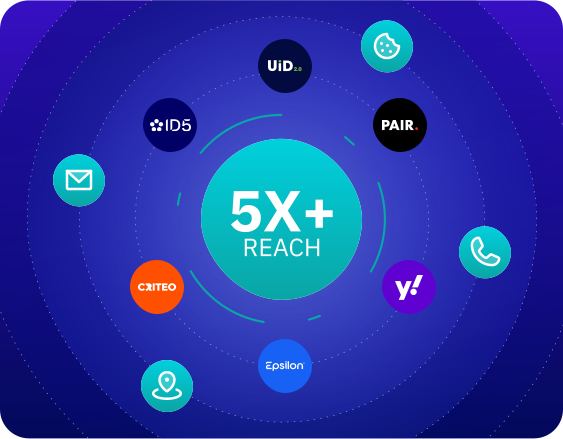
An identity graph is a structured dataset that connects identifiers from various sources—such as device IDs, email addresses, hashed emails, phone numbers, cookies, and offline data—to build a comprehensive and unified view of an individual or household. Think of it as a sophisticated map, stitching together digital breadcrumbs scattered across multiple devices, platforms, and environments.
One or multiple identity graphs can be customized and leveraged to support a myriad of use cases including:
Interoperability is the capability of different systems, platforms, or datasets to work seamlessly together, exchanging and using data effectively without friction.
For publishers, interoperability isn't just a nice-to-have, it's strategic:
Competitive agility: Quickly adapt to emerging standards and identifiers, maintaining market leadership.
Real-time is critical in identity and audience activation because:
Competitive advantage: Act faster than competitors, maximizing publisher yield and advertiser satisfaction.
Upon opt-out, user data is removed from active processing pipelines, and the user’s identifiers are deleted according to configurable retention policies. This can be done via the following methods:
Additionally, Optable supports privacy frameworks including:
Optable is a highly interoperable platform designed to connect with commonly used data sources, cloud environments, and adtech systems. It supports:
This broad interoperability with Optable allows publishers and media owners to activate and scale their data efficiently across their existing tech stack. View all integrations here.
Optable supports a wide range of data types for building and managing identity graphs. This includes identifiers, links between identifiers, geolocation, traits, and events associated with those identifiers. Data can come from websites, mobile apps, cloud platforms, customer databases, and data warehouses.
Both structured batch files (such as CSV or JSON) and real-time data streams are supported. Data can be ingested from sources like web and mobile SDKs, APIs, cloud apps, or directly from environments such as Snowflake and BigQuery. This flexibility allows publishers to bring in data from various systems, including CRMs, CDPs, DMPs, email platforms, and bespoke databases—all within a privacy-safe framework.
Optable enables both real-time and batch data collection from a wide variety of sources. Data collected typically includes identifiers (such as email addresses or device IDs), relationships between identifiers, and user traits or attributes.
Real-time collection is supported through SDKs for websites and mobile apps, capturing data directly from user interactions. Batch data collection is available via file uploads, APIs, and integrations with cloud platforms and data warehouses like Snowflake and BigQuery.
This flexibility allows publishers to collect data from web properties, mobile apps, marketing platforms, CRMs, and internal databases, all within a privacy-preserving and interoperable environment.
The main difference is availability of tokens, but technically the implementation remains the same. Optable currently supports Prebid client-side integrations and is working on a server-side Prebid module.
Optable's SDK responds in under 100ms. Some race conditions may occur when resolving UID2 tokens, but the SDK writes the updated UID2 token to local storage and dispatches a JavaScript event.
Free your team from complex integrations and upkeep; Optable makes connecting to your existing sources, destinations, and partners faster to implement and easier to maintain.