The lobby hummed with warm, friendly greetings and enthusiastic introductions as nearly 200 leaders from all sides of the advertising space converged at the People Inc. Auditorium in Lower Manhattan for Optable Connect NYC. Reunions and new connections alike shared in the early morning excitement over coffee, pastries, and the golden sunlight of a perfect October day.
Screens depicting a packed 8+ hour agenda complemented and endorsed the playful animations proclaiming that “Agentic advertising runs on Optable.” Throughout the hallway, brightly colored blocks seemed to bounce off the floor, drawing the eye and confirming that the forward-thinking, agentic-inclined attendees were in the right place.
As the clock inched towards showtime, the quiet auditorium saw a slow trickle of attendees that quickened into a flood, filling the space with soft murmurings of interest and anticipation. Then, with nearly 200 seats filled, the program could finally begin.
Patrick Viau, Optable’s CRO and emcee extraordinaire, opened the event with a congenial attitude, welcoming folks from the buy and sell sides, press organizations, analyst desks, and beyond. He quickly addressed the agentic elephant in the room: the buzzword that is “agentic” itself. But with the kind of confidence that easily erases doubt, he declared, “Agentic advertising is here.” The proof: people are already transacting agentically, and that pattern isn’t likely to slow down any time soon.
The day ahead would further support this claim, as agency representatives, publishers, platforms, journalists, analysts, and researchers covered how agentic deals restore the buyer-seller conversation, why data foundations come first, where humans stay in the loop, and how agentic grows alongside programmatic.
Optable’s CEO, Vlad Stesin, took the stage next, with a note of appreciation for Patrick’s energy and the transformative effect he’s had on the company since joining, as well as a slight condemnation of Patrick’s alleged propensity for hugging. Vlad then built on the foundation Patrick laid, expressing that “advertising is about to be run by software that talks to other software, on top of software it trusts.”
That’s the future of advertising Optable is building towards.
The Case for Agentic Advertising
Earlier this year, the speakers at Optable Connect Toronto agreed that agentic advertising had arrived. Those of us in New York last week tackled some important follow-ups: what does that look like in practice, and what does the market need in place, on both sides, to make it work?
Vlad's answer started with what programmatic left behind. Scale came at the cost of context, and with it the direct conversation between advertiser and publisher. “Agentic advertising puts context back into the transaction,” he said, and with it, direct deals “stop being a privilege of the biggest players.”
He was just as clear that technology alone won't carry the shift: “Disruption isn't about the availability of new technology. It's a change in behavior.” Optable's role, in his framing, is to bring order to signal chaos: “We're building the foundation for a new era of transactions.”
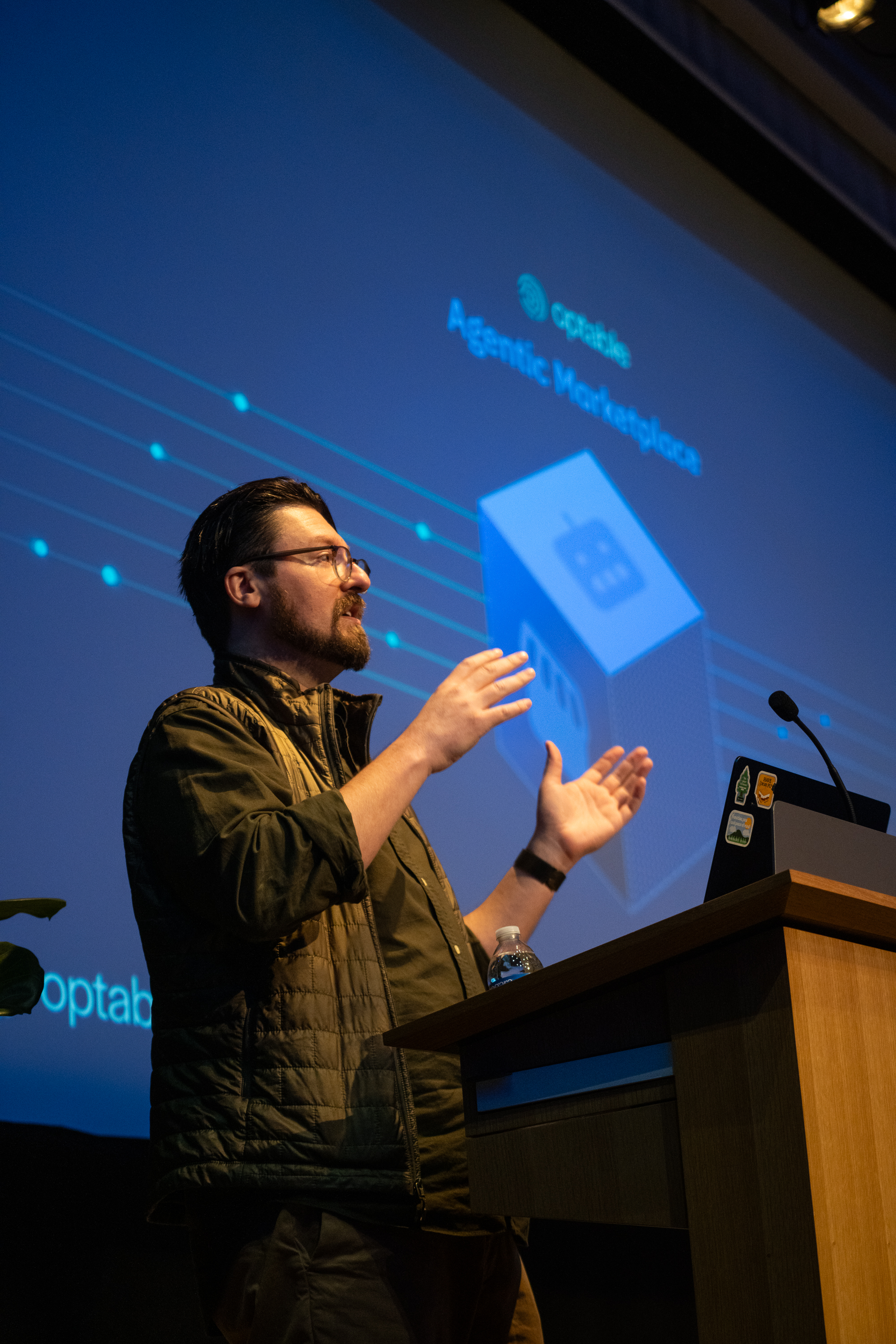
Next to the stage: Co-Founder and CPO Bosko Milekic, VP of Product Andy Sharkey, and Senior Product Manager Chris Couture. Bosko opened with the question Optable has asked all year, “Are you agent-ready?”
Andy described agentic advertising as direct IOs with the success of programmatic, where Optable is the storefront for sellers to create their ad products. He and Chris walked through an end-to-end media buy in which agents share data without exposing it, plan the campaign, and prepare the order. Every step up to the buy is automated, and nothing goes live until a person approves it.
The announcement that drew the biggest reaction: the launch of the fee-free Agentic Marketplace for buyers and sellers, with access fees for buyers who want advanced features.
From there, the agenda widened from Optable's roadmap to the market as a whole. A few threads ran throughout the day’s sessions, across media buyers, sellers, analysts, and industry experts. Each one is worth considering for your 2027 planning.
Agentic Deals Restore the Advertiser-Publisher Conversation
“Programmatic was a huge innovation,” Credera's Rio Longacre said during a session on what agentic can learn from programmatic. Programmatic scaled the transaction and automated the planning. Bosko named what the innovation cost: the best campaigns combine brand and media company knowledge, and that conversation had no place in an automated auction. Buying from a “soup of impressions” has left little transparency, and advertising has been optimized for volume over impact.
Agentic stands to bring the conversation back. “Agentic is about these buyer and seller conversations,” said AdExchanger's Anthony Vargas. Mediavine CRO Amanda Martin put it in human terms: “This industry runs on relationships,” and when buyer and seller agents talk, buyers and sellers are talking.
EMARKETER's Yory Wurmser added a market view: AI will first benefit the walled gardens, he said, but agentic, as an extension of direct demand, can level the field for smaller players, as well.
Restoring the conversation also changes the economics. Rio said that “things haven't gotten better for publishers” since programmatic because incentives aren't aligned, and RTB supply keeps rising while publisher traffic falls. Amanda's ask of the buy side was direct: “We need the buy-side to push the middlemen out.” Goodway Group is already moving that way, with fewer SSPs and more direct publisher connections since building Passport One on Optable.
Data Foundations Decide Who’s Ready for Agents
If one piece of advice came out of nearly every session, it was this: agents are only as useful as the data underneath them. “All of these decisions start with data,” Newton Research's Matt Emans said. He warned that throwing an agent at any task “isn't always the best course of action” until you understand the data and methodology behind it.
Involved Media's Shukmei Wong agreed, expressing that users shouldn’t blindly trust AI outputs, especially if they haven’t vetted their data first. What everyone wants, she said, is “a clean line and an understanding of identity.”
The room's own answers backed them up. In the live survey, more than a quarter of participants said their data and systems aren't ready for agentic buying and selling. Google Cloud's Bora Beran made the same point from the infrastructure side: “You have to provide clean data and enough context to the model,” and a good foundation makes everything after it easier to scale. Yory's checklist for agentic readiness included getting data organized in a way agents can use.
The day's final panel showed what that looks like for publishers. Panelists noted that the way inventory is described today, with simple labels like “sports” or “lifestyle,” misses the richer, more nuanced signal buyers want.
Amanda's advice: “Invest in the data foundations,” starting with a deep dive into your own signal treasure trove. Hearst's Dave Lundell described that foundation as ongoing work, built for what you're doing today and what comes next. It's also where Optable started the day: Vlad described Optable Audience Agent as a way of “turning passive data into an active asset.”
Agents Do the Legwork; Humans Approve the Deal
Goodway Group CEO Paul Frampton-Calero shared the impact of strategically adopting agentic tools. Using Optable Audience Agent, he reported that his team goes from a brief to audience segments in under an hour, work that could take days or weeks by hand, and some of those agent-built audiences delivered better ROAS than the alternatives. The time saved goes back into strategy. Matt Emans described the same shift across the industry: 12 to 18 months ago, the focus was on time savings, and now it's on better outcomes and measuring more often in addition to efficiency.
The need is just as clear on the sell side. “A week between brief and buy is optimistic,” Amanda said of today's direct-deal process. Unity's James Prudhomme noted that a model “can consider a much, much wider set of audiences” than a manual workflow.
None of that takes people out of the deal. Two-thirds of survey respondents said they want agents to have more freedom to negotiate and prepare orders, with people finalizing and approving them, not full autonomy. The workflow Andy and Chris demoed still ends with a person approving the order.
Heather Carver, of tvScientific by Pinterest, urged attendees to treat AI as “a copilot, not on autopilot,” and Shukmei urged teams not to assume an LLM's first answer is correct. On the sell side, speakers on the signal panel argued that human-in-the-loop makes sales teams more valuable, since relationships still close the deal.
Early But Not Premature: Agentic Grows Alongside Programmatic
Of the 105 attendees who participated in the live survey, 76% lean positive on agentic advertising, and 94% have already run an agentic direct order or plan to by the end of 2027. For most, though, that first order is still ahead: 51% expect it in 2027.
The most-cited hurdle was people, not tools: 37% named internal organizational readiness as the factor holding them back from agentic adoption. “It takes a long time for people to change the way they behave,” Yory said, and Rio agreed: there's no wholesale disruption yet, but “there is AI in every pitch.”
What's taking shape is a layer that works alongside programmatic. Yory pointed out that agents can improve programmatic, too, with better signals, faster decisioning, and more transparency. IAB Tech Lab CEO Anthony Katsur described AAMP as an extension of existing standards, and said agentic standards are being built to support both direct and programmatic buys.
Paramount's Derek Nicol reminded the room, “We're an industry built on great standards.” With AAMP and AdCP increasingly overlapping, Yory and Bosko both argued that interoperability matters more than which protocol wins.
Early doesn't mean there's time to wait. During the survey, a buy-side attendee warned that buyers aren't holding off while publishers wait for the money to show up first. In their view, publishers who build now will be part of the agentic equation, and those who wait risk being left out. Paul's advice to publishers was practical: identify and prioritize the agency partners with an appetite for agentic.
Session-by-Session Breakdown
Here's a closer look at what each session brought to the stage, picking up threads from the themes described above.
Own Less, Orchestrate More: Partnering Without Owning the Stack
Vlad Stesin, Optable, with Paul Frampton-Calero, Goodway Group
Paul explained why Goodway wanted an intelligence layer that works horizontally across the ecosystem, and why it built Passport One on Optable instead of trying to own every piece.
“You don't need to own everything yourself.” — Paul Frampton-Calero
With Optable Audience Agent, his team now goes from brief to audience segments in 30 minutes instead of days or weeks, and some of those audiences reportedly delivered 40% better ROAS.
Ground Truth for Agents
Vlad Stesin, Optable, with Matt Emans, Newton Research, and Shukmei Wong, Involved Media
Matt and Shukmei agreed that agentic decisions start and end with data, and that agents deliver the best results when teams understand the data and methodology behind them.
Matt described agent pipelines that read signals across surfaces to surface insights a person would miss, while Shukmei cautioned that “AI can't automatically fill in the gaps for you.”
From Plan to Reconciliation: Inside IAB Tech Lab's AAMP
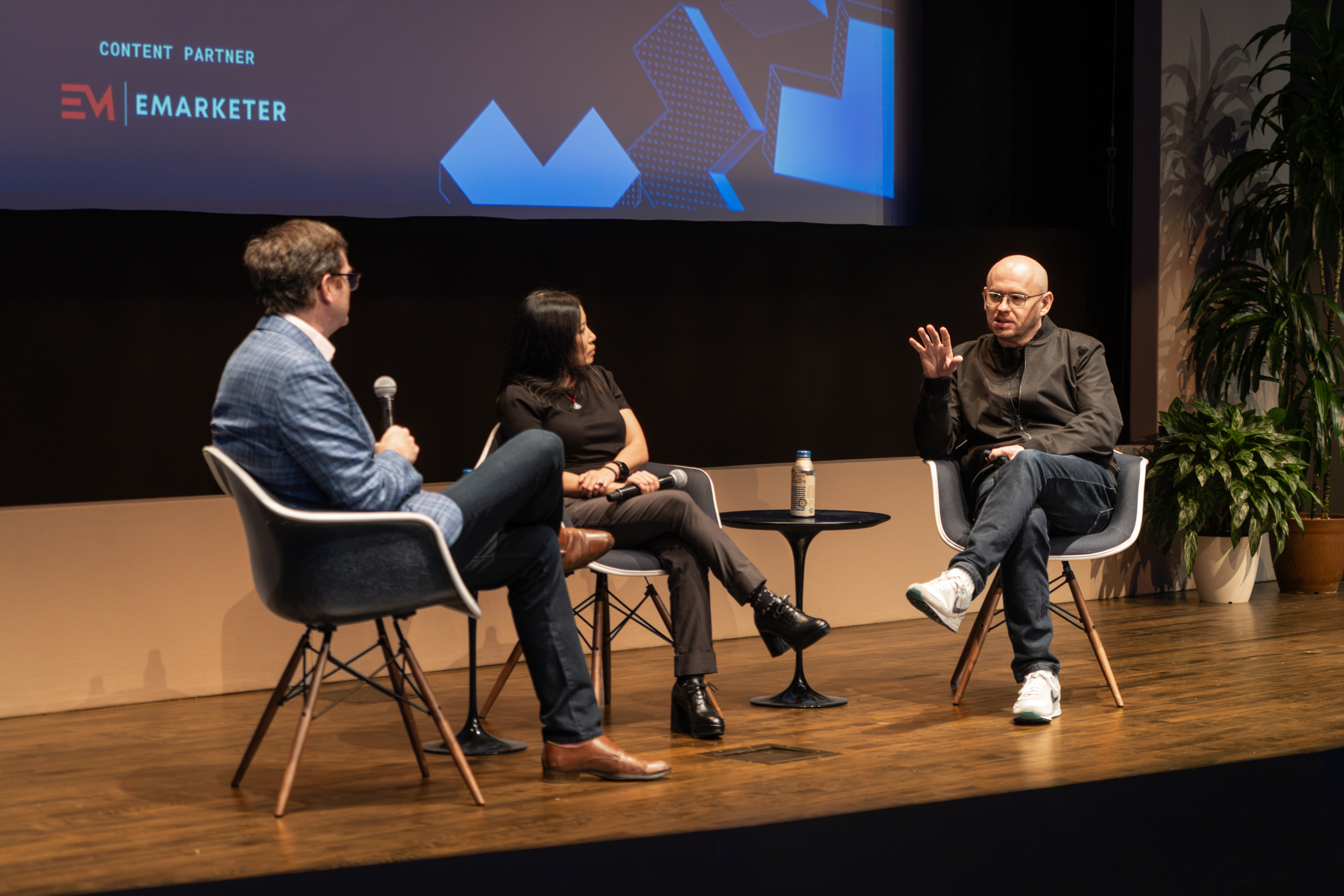
Anthony Katsur, IAB Tech Lab, and Derek Nicol, Paramount
Katsur explained how IAB Tech Lab's Agentic Ad Management Protocol (AAMP) builds on existing standards and taxonomies to support both direct and programmatic buys, and how IAB Tech Lab's “early, but not premature” agent registry will add trust and transparency. Nicol called standards “the building blocks of success” and urged attendees to ask their vendors how they’re incorporating AI into their product roadmaps.
From Programmatic to Agentic: How AI Could Re-wire Media Buying
Yory Wurmser, EMARKETER
Yory argued that AI will first benefit the walled gardens, but agentic, as an extension of direct demand, can level the field for smaller players and make programmatic more efficient.
His advice: be specific about what you want from agentic, set clear governance rules, get your data ready, and experiment.
What Agentic Buying Has to Learn From Programmatic
Anthony Vargas, AdExchanger (moderator), with Rio Longacre, Credera, and Bosko Milekic, Optable
Rio acknowledged how innovative programmatic has been but said incentives aren't aligned, leaving publishers stranded. Bosko described what agentic has the potential to restore: a conversation between what a brand knows and what a media company knows. He called for interoperability so agents can talk regardless of which protocol wins.
Are You Agent-Ready? A Live Audience Survey
Andrew Dumas and Andy Sharkey, Optable
Andrew and Andy polled the room live on agent readiness and agentic advertising. 105 attendees answered live, most representing publishers and sell-side tech. Of the respondents, more than three-fourths lean positive on agentic advertising. In fact, 94% have already run an agentic direct order or plan to by the end of 2027.
Between questions, one buy-side attendee recommended publishers keep up with the agentic shift. Another attendee increased the pressure, highlighting their own success in running agentic deals.
How Unity Made Its Gaming Audience Addressable and Omnichannel, With Optable and Google Cloud
James Prudhomme, Unity, Bora Beran, Google Cloud, and Marc-Olivier Thibault, Optable
James made the case that stable addressability future-proofs Unity's business, and described using Audience Agent to build segments from a far wider set of audiences than human intuition could consider. Google Cloud's Bora Beran described AI as a companion that works only as well as the data and context it's given.
Making the Most Valuable Signals Easier to Buy
Crystal Jacques, Optable, with Heather Carver, tvScientific by Pinterest, Dave Lundell, Hearst, and Amanda Martin, Mediavine
Each panelist described their most valuable signal — Pinterest's commercial intent across visual search and shopping, the trust of Hearst's readers and viewers, and Mediavine's contextual data — and agreed that flattening it for programmatic loses the context buyers want. Their shared advice: invest in your data foundation, and describe your inventory so agents can read it.
Closing Remarks
Andrew Dumas, Chief Business Officer, Optable
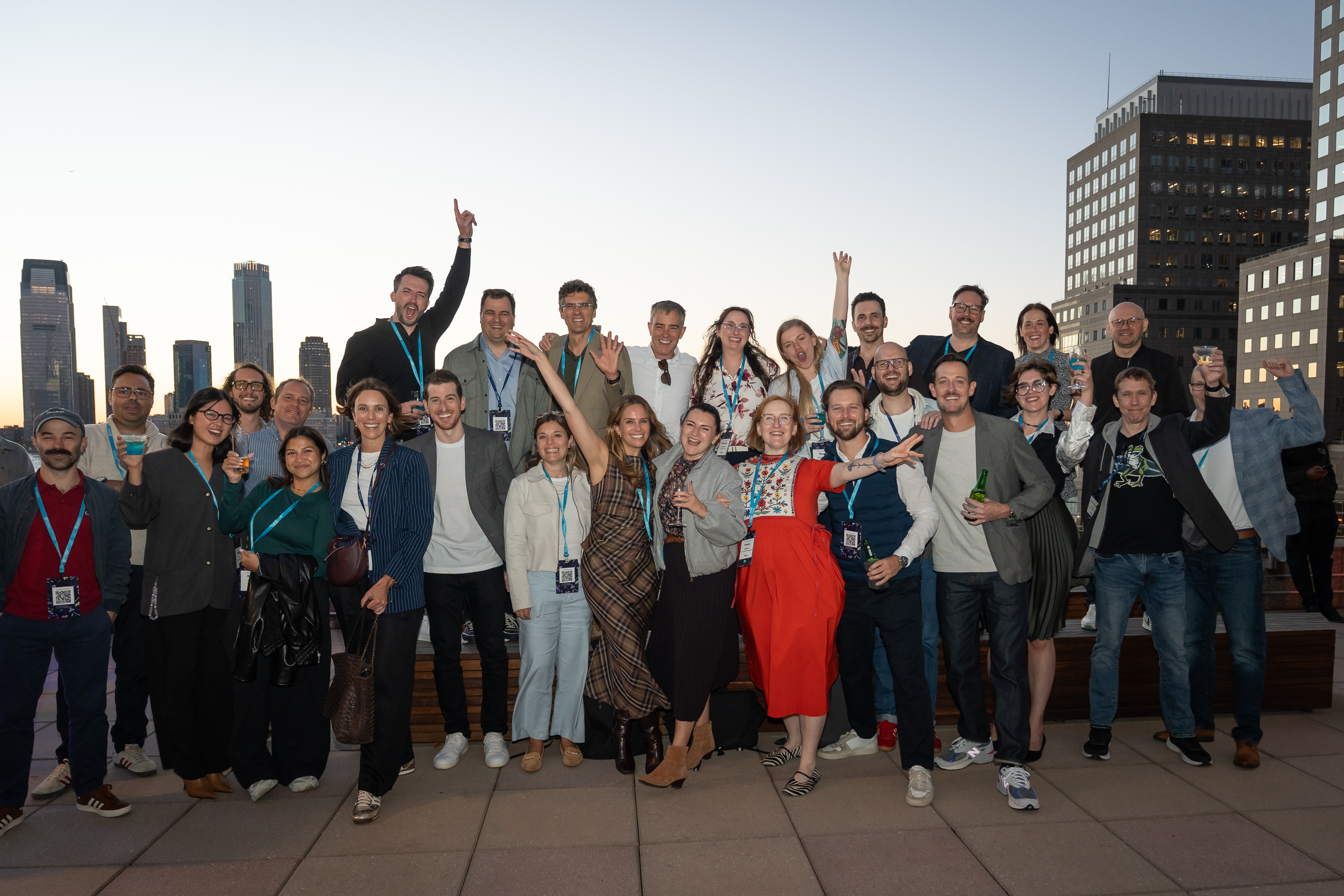
Andrew pulled the day together, describing Optable as “a company of builders” that builds “brick by brick,” highlighting the “freegentic” model announced for Optable’s Agentic Marketplace. He thanked speakers for contributing, encouraged guests to connect with the team, then sent everyone out to the terrace.
Next Steps for Agentic Advertising
Whether you buy media or sell it, most of the work happens before an agent ever touches a campaign. Based on what we heard, here's where to start this quarter:
- Audit your data foundation. Find out what valuable signals you have, evaluate how they’re structured, and adjust so an agent could read them.
- Pick one workflow to automate, with a human approval step. Decide whether to build, buy, or partner on it this quarter, and name who owns it.
- Get fluent in the standards. Know where AAMP, AdCP, and MCP each fit in your workflow before a partner or buyer asks.
- Ask your partners where they stand. Find the agencies with an appetite for agentic, and ask your vendors how AI fits in their roadmaps.
Optable is Building the Infrastructure for What Comes Next
Vlad opened the day with a picture of advertising “run by software that talks to other software, on top of software it trusts.” Over the sessions that followed, the room heard what that trust rests on: data that agents can read and transact against, with a person approving every deal.
That's the foundation Optable is building.
Optable provides the identity infrastructure, data collaboration, and agent-to-agent tooling, including Optable Audience Agent and Sales Agent, that let publishers and agencies act on these ideas.
Earlier this year, we shipped our agentic signals layer to put them to work. Now, we’re inviting publishers, platforms, agencies, and advertisers to participate in our Agentic Marketplace, where buyer agents and seller agents can transact directly — faster deals, better-fit audiences, and buyers and sellers back in conversation.
Wherever your team is on agentic, we're ready to build with you.
Thank you to every speaker, partner, and attendee who closed out Advertising Week New York with us and made the trip worthwhile.