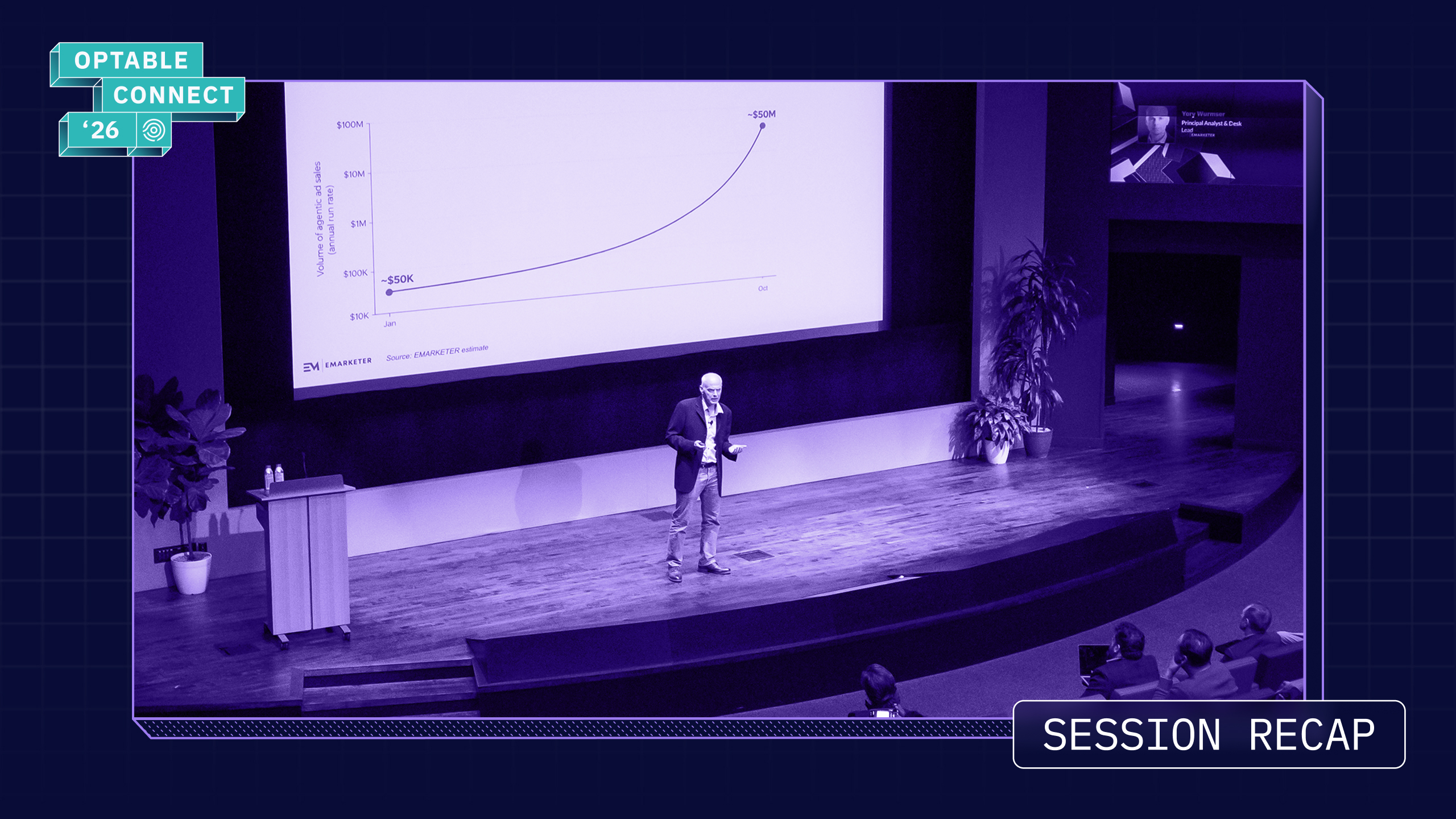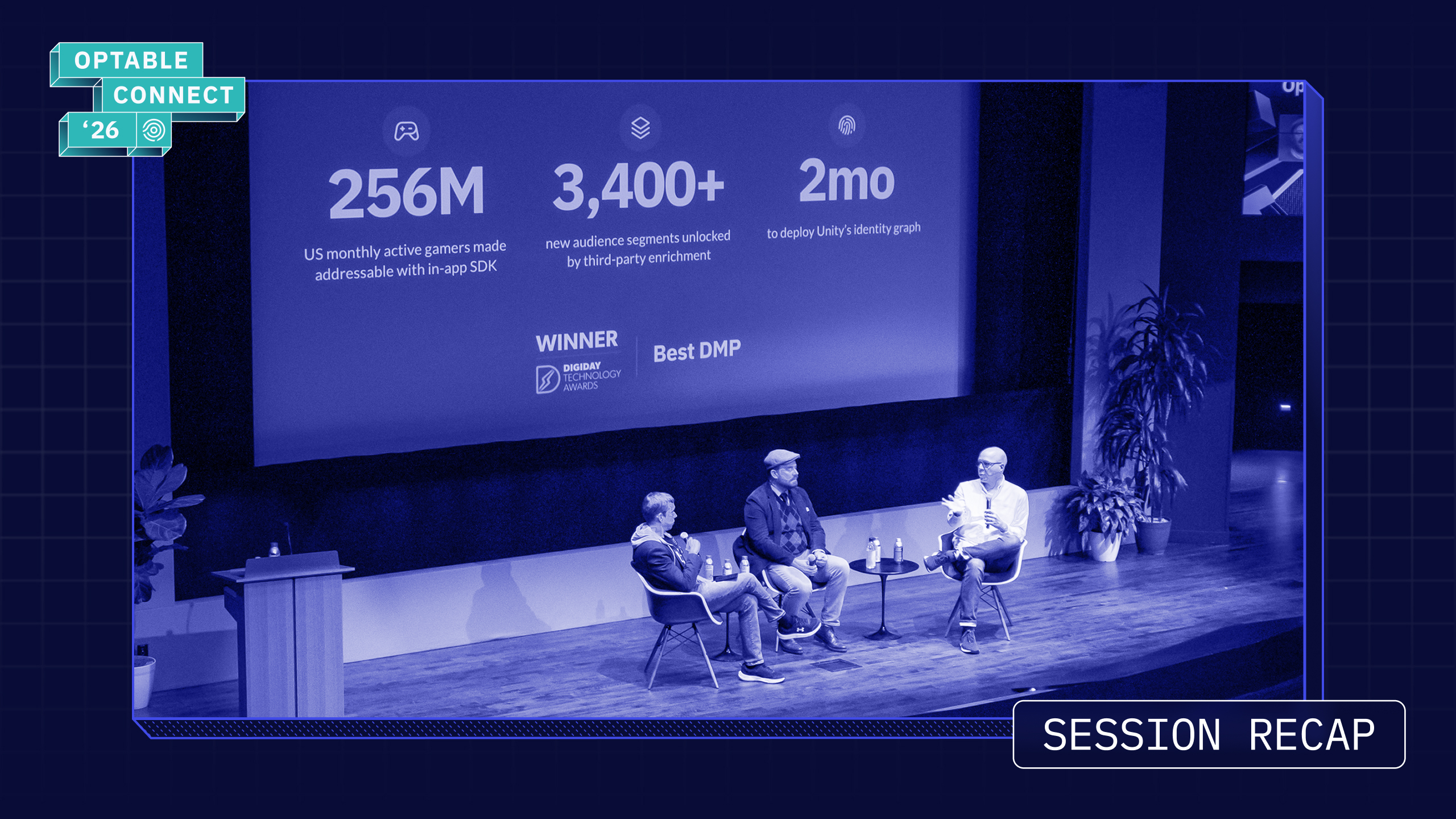
Gaming has the audience brand advertisers want and almost none of the addressability they expect everywhere else. Reaching players has meant separate buys on separate terms, outside the rest of the media plan. Unity set out to close that gap without moving player data out of its own environment.
James framed addressability as the way to future-proof the business: "Without stable addressability, that sense of value creation isn't going to be as strong." Once Unity's player base was resolved into an audience brands can plan next to their CTV and web buys, the door to a new measurement approach also opened.
That foundation makes agents useful. A person can only weigh so many signals, James noted, while a model "can consider a much, much wider set of audiences." Unity uses Optable Audience Agent to build segments that way rather than relying on intuition alone. Bora described AI as a companion that depends on what it's given: "You have to provide clean data and enough context to the model."
The takeaway for publishers and platforms with large but hard-to-address audiences is about sequence. Organize and orchestrate your data on purpose-built infrastructure first. Scaling agents on top of it gets much easier.