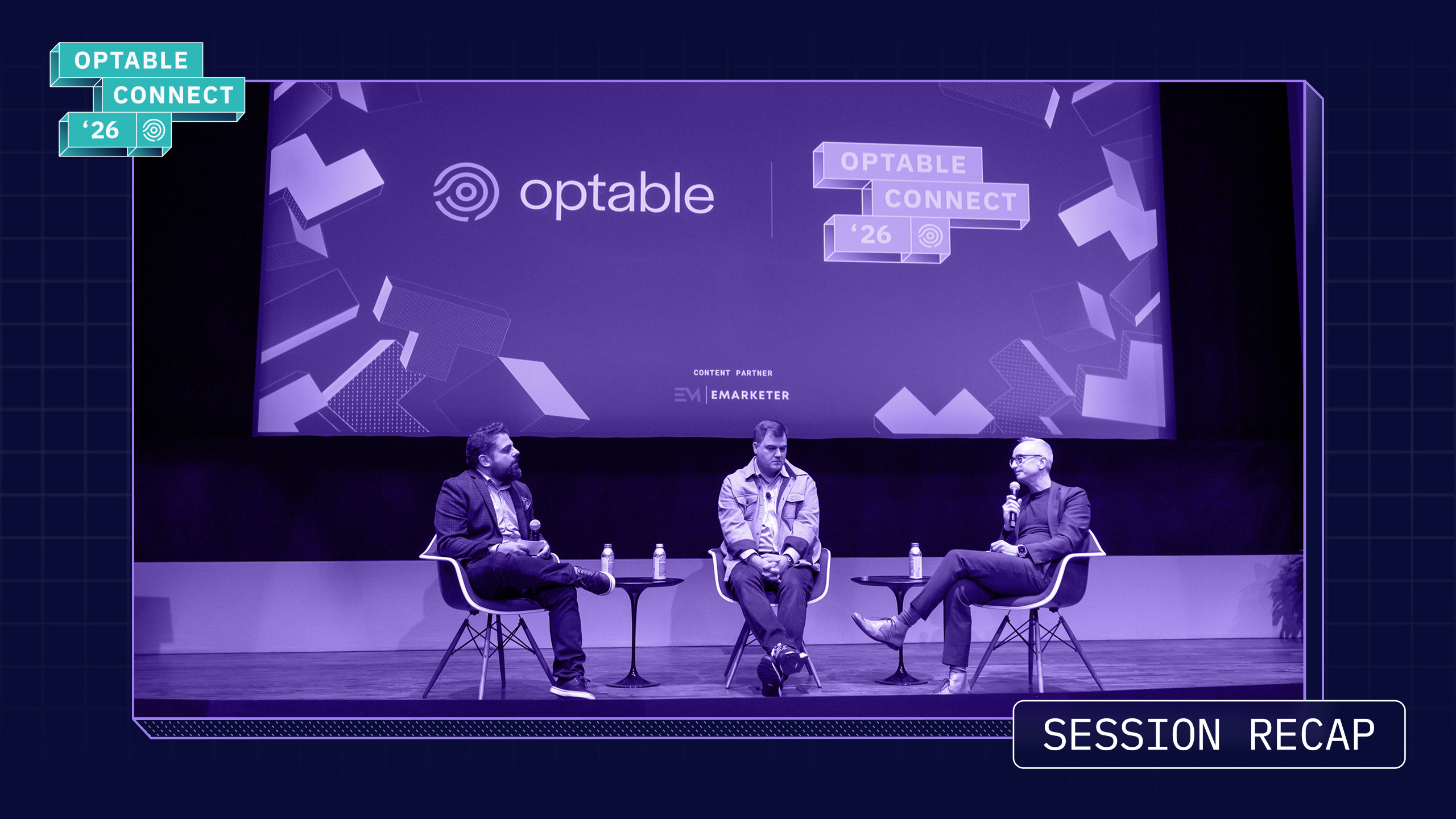

Earlier this year, Optable ran the State of Agentic Advertising survey with Digiday and found that more than half of publishers cite internal readiness as a barrier to agent-driven demand, second only to technical complexity.
The technology itself gets most of the airtime in agent readiness conversations. Yet an agentic deal moves through Ad Ops, Revenue, Data Engineering, Legal and Product, and it stalls wherever ownership is unclear. We created the Agent Readiness Self-Assessment & 90-Day Plan to help teams of all sizes identify where they stand today, with a phased plan to close the gaps.
The Roadblock is Coming From Inside the Organization
Agentic deals can run as direct orders or programmatic deals, so they depend on teams that usually work on separate tracks. A single request from a buyer agent can touch packaging, pricing, audience data, and consent at once. Buyer agents evaluate multiple publishers at the same time and may commit to the fastest credible option. A request that waits on a manual handoff between teams risks going to another publisher.
That makes response speed an organizational question as much as a technical one. The primary hurdles to overcome:
- Knowledge and ownership sit with too few people. Unprepared teams may only have one or two people who understand agentic AI and no shared ownership. Every handoff between Sales, Ad Ops, and Data runs through those few people, and work stalls when they’re busy or away.
- Legal questions remain unanswered. In the State of Agentic Advertising survey, 37% of publishers cited regulatory or compliance uncertainty as an obstacle to agentic adoption. Without a clear answer on consent for agentic data exchange, deals get stuck.
- Training hasn't been funded. The same report concludes publisher teams likely need more education to win internal buy-in and resources. Respondents ranked education and organizational change among the least-invested areas.
- Bandwidth is stretched. Many publishers are rebuilding data infrastructure while core revenue is under pressure, and there’s only so many hours in the week. Adding headcount to tackle the project may not be an option, especially for smaller publishers.
Without training, knowledge stays concentrated. Without clear owners, a stretched team can't decide which hurdle to clear first. Deciding on ownership is where your organization needs to start.
No Team Gets To Sit This One Out
An organization that isn't ready only has one or two people who understand agentic AI, no shared ownership, and workflows that are mostly — if not fully — manual. In an agent-ready organization, every team knows its role, responsibilities are defined, and Sales and Ad Ops use agentic workflows as part of their routine.
Here's what readiness asks of each team:
None of these roles work in isolation. Readiness requires a cross-functional team with clear ownership, responsibilities, and mutual understanding.
Let Agents Tackle the Legwork
When agents take over research and setup, people can prioritize strategy, judgment, and approval.
The Weather Company shows how that split works in practice. Its agents handle audience discovery, linking real-time weather conditions to consumer behavior, while the team provides final verification for accuracy and brand safety. Benny Pang, product leader for audience data, calls the agents “a force multiplier.”
Turnaround times shrink as well. At Connect, Goodway Group described going from a client brief to audience segments in under an hour, compared to days or weeks when tackled manually.
For publisher teams, the change shows up in where the hours go. Ad Ops spends less time on manual setup and more time on the deals that perform. Sales packages audiences faster and answers RFPs with more precision. The time that’s freed up gets allocated to direct deals, new audience packages, and partner relationships.
People stay in the loop. Two-thirds of Connect respondents want agents to have more room to negotiate and prepare orders, with humans getting the final say. Where exactly that line sits is a decision each publisher will need to make.
From Kickoff to Agent-Ready in 90 Days
Ninety days is enough time to get to a working pilot with named owners, early results, and agreed rules. Jumping straight to adopting new technology tends to backfire. Without a shared foundation, an agent can end up pitching audiences nobody vetted at prices nobody approved.
The plan below runs in three phases. Each one names who leads, what to do, and how you'll know you're ready for the next phase.
Day 1 to 30: Assess & Organize
Data Strategy and Product lead this phase, with Ad Ops, Revenue, Legal, and Data Engineering playing their parts. As part of this phase, be sure to:
- Stand up a cross-functional working group and give it decision rights over the readiness plan. Book a recurring meeting before the first one ends.
- Record where you’re starting. Document authenticated traffic, addressability, enrichment coverage, and how long RFP responses take today.
- Identify and rank your organization’s gaps by impact. Assign someone to each one.
- Map your current integrations against the agentic frameworks your partners support.
You’re ready to progress when every gap has an owner, you’re written down your baselines, and the group is meeting on a regular schedule.
Day 31 to 60: Build & Activate
Ad Ops and Data Engineering take ownership during this phase, with Revenue shaping what gets tested and Legal reviewing. During the second phase, prioritize the following:
- Choose one pilot segment amounting to a single property, audience, or deal type that Revenue believes buyers want.
- Agree on scope, timeline, and success criteria so every team measures the same thing.
- Record content metadata and taxonomy; clean it up for the pilot inventory, and document the changes.
- Work with at least one partner that can activate both direct orders and programmatic deals, then set up your agent to surface the pilot audiences.
- Maintain a control group from day one. Compare results against your baselines each week.
You’re ready to move onto phase three when your pilot is live, the control group is clean, and you have early numbers to review.
Day 61 to 90: Sell Agentically
Revenue Strategy and Data lead the third phase, tapping Ad Ops and Legal for support. During this phase, you’ll need to:
- Decide how your seller agent represents you. That might include which audiences it surfaces, how it describes inventory quality, which deal types it puts first, and how it answers buyer questions.
- Write governance policies for security, accuracy, transparency and consent, and push them through legal review.
- Report agentic-sourced revenue as its own line so leadership can see what the pilot produced.
- Train each role on its part of the workflow. Practical use cases might include setting guardrails, validating outputs, and knowing where human judgment still has a role.
- Pick the next segment to bring into the program.
You can start scaling when you’ve configured your seller agent, policies are approved, agentic revenue shows up in reporting, and each team has been trained on its role.
Start By Getting Everyone in the Same Room
An agent-ready organization doesn't need every answer on day one, but it does need a plan to educate and empower your people before you can start transacting agentically. The technology matters, but it performs only as well as the teams running it.
Buyer agents are already comparing publishers on how fast and how clearly they respond. The publishers those agents return to will be the ones whose teams can speak for their inventory without a week of internal handoffs.
Optable Audience Agent gives Sales and Ad Ops turns a client brief into audience segments your team reviews. When you're ready to sell, Optable Sales Agent represents your inventory to buyer agents, and the Agentic Marketplace lets them place orders directly while you keep control of pricing and approvals.
If you're working out where your teams should start, schedule a meeting and we can walk through it with you.