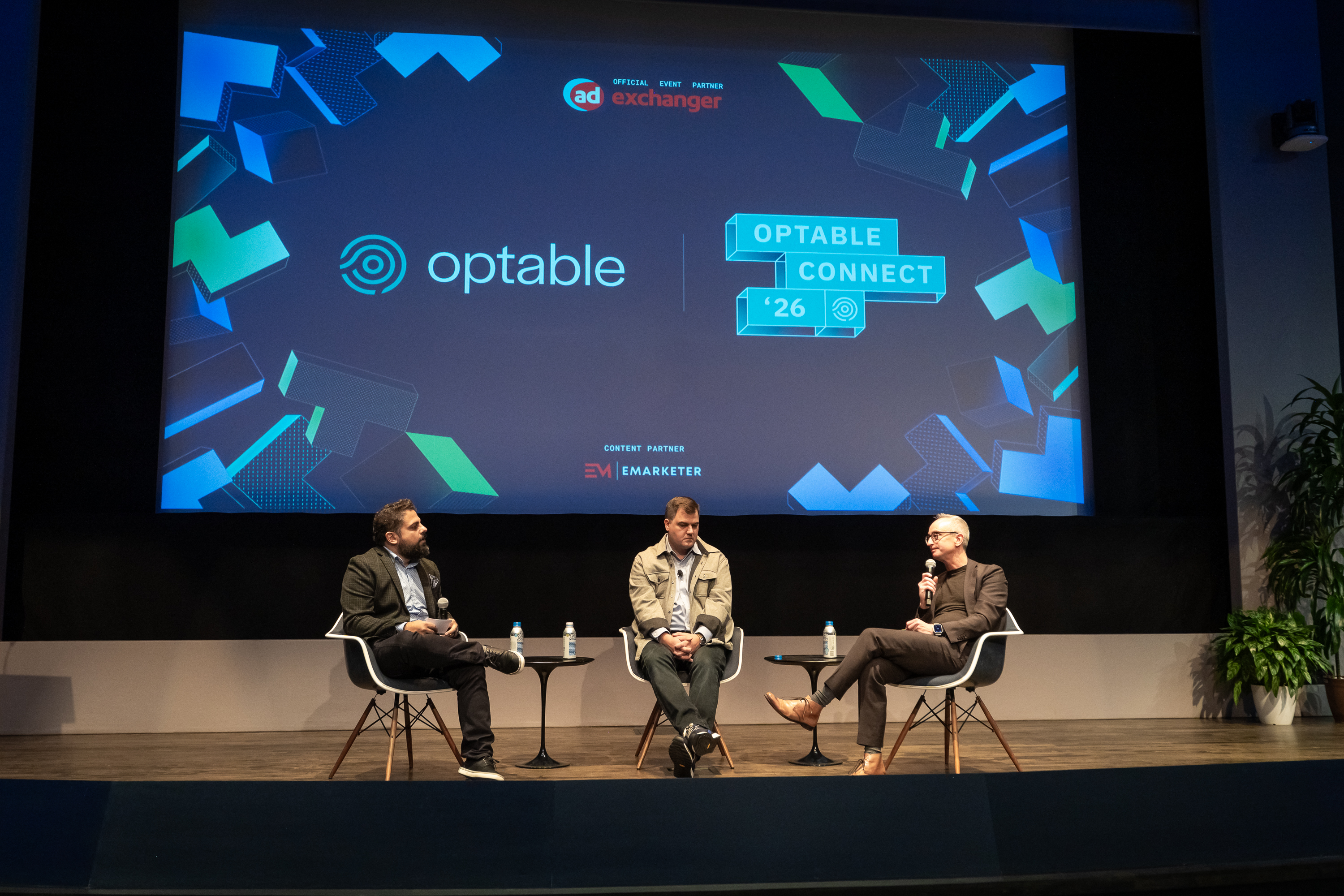
Programmatic proved machines could buy media in real time at enormous scale. It also squeezed publisher yields, added middlemen who never left, and gave buyers a supply chain they couldn't see into. Agentic buying is a chance to scale direct and programmatic transactions, and this panel asked what that will take.
"Programmatic was a huge innovation," Rio said, crediting it with faster transactions and automated planning. But "things haven't gotten better for publishers," because incentives were never aligned. Bosko named what was lost along the way: the best campaigns combine what a brand knows about its audience with what a media company knows about its context, and buying from a "soup of impressions" left no room for that conversation.
The panel agreed that agentic stands to restore relationships. "Agentic is about these buyer and seller conversations," Anthony said. Agent-to-agent communication can route around the middlemen and make deals more transparent. Agents aren't limited by human memory when they assemble an RFP response, and they can do it more efficiently than the manual process publishers have traditionally relied on. Humans still have the final say.
Behavior changes slowly, there's no wholesale disruption yet, and "there is AI in every pitch," as Rio expressed. Bosko's next step for the industry was interoperability, so agents can talk to each other regardless of which protocol is used.