Why Identity Is Key to the Agentic Revenue Engine
As the agentic era takes off, publishers and advertisers are looking to enable and implement intelligent workflows for adtech use cases. At the same time, third-party identifiers continue to decline, so publishers are motivated to stop relying on external signals and start building and activating their own direct audience data. The solution positioned to allow publishers to leverage new AI-powered agents and turn first-party data into their most durable asset is the identity graph.
Agentic solutions generally connect to data from a variety of sources, including first-party, partner integrations, and contextual or 3rd party signals. While the latter two sources have some influence on AI-powered results, the richer, more accurate, and more detailed your first-party data is, the more you can control and improve the outcomes from your AI agents.
Additionally, as signals such as third-party identifiers (including device identifiers and IP addresses) decline or become inconsistently available, audience addressability is undergoing a fundamental shift. You can no longer rely on free, third-party signals. Instead, high-quality audience data and addressability now depend on direct, privacy-first audience relationships that build trust and prioritize data security and consent.
The identity graph sits at the center of this double transformation, feeding high-quality data to agentic tools while also enabling publishers to recognize audiences across channels and activate them in privacy-safe ways. Strategically activating your ID graph unlocks revenue opportunities that enhance and extend beyond programmatic advertising.
What an ID Graph Really Unlocks
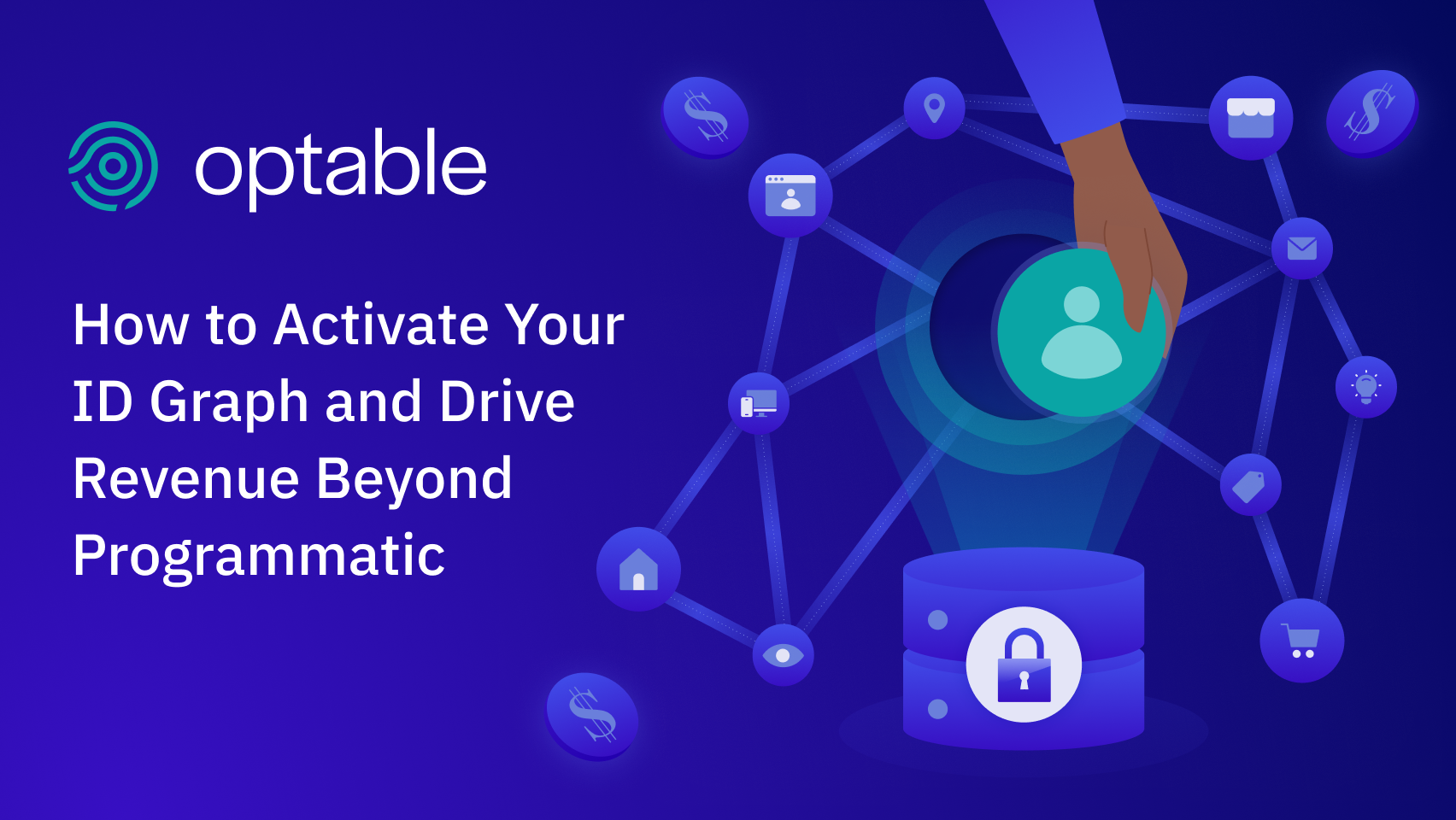
Your ID graph becomes the connective tissue between your data, your partners, and your revenue strategies, as well as the core intelligence that powers your agentic solutions. By linking identifiers such as hashed emails, device IDs, login IDs, contextual signals, and more, publishers can use identity graphs to build up a unified view of their audiences across web, mobile, CTV, and in-app environments.
This unified view allows you to:
- Empower AI-powered audience planning and activation
- Increase addressability without having to rely on third-party cookies
- Improve match rates with key partners (SSPs, DMPs, CDPs)
- Enrich inventory with high-value audience signals
- Maintain transparency, consent, and privacy controls
A robust ID graph transforms fragmented data into a powerful tool for monetization, measurement, collaboration, and operational efficiency. Here’s how to ensure your identity strategy is scalable and aligned with business objectives for long-term success.
Step 1: Align Your Teams around a Strong Identity Strategy
Before they can achieve any kind of successful activation, publisher organizations need to set clear goals and coordinate across teams and functions.
Assemble a Cross-Functional Workgroup
Identity-related projects require coordination with multiple teams across a publisher’s business, including ad operations, data analysts, developers, and legal teams. A cross-functional workgroup ensures alignment on compliance requirements, use case prioritization, and execution.
Define Success for Your Organization
Whether it’s increasing bid CPMs through enrichment or launching new authentication strategies, every initiative must have well-defined, measurable success markers. Correlate these goals with clear tracking methodologies to ensure progress and accountability. Depending on where you intend to move the needle, you may need to consider custom tooling for effective tracking and attribution.
Connect Goals to Measurable KPIs
Tie your goals to measurable KPIs such as match rate improvement, authentication growth, and time-to-integration for new partners. KPIs will largely fall into four primary categories: monetization and revenue; data and identity strategy; campaign performance and measurement; and operational efficiency.
Respect Regulations and Requirements
Privacy regulations vary by location (e.g., GDPR, CCPA), so your identity solution must account for consent preferences and legal restrictions no matter where your audience is located. Implement transparent data collection practices, and use consent management platforms (CMPs) where necessary to increase trust with advertisers and audiences.
Step 2: Audit Your Data and Identify Gaps
Our report with Digiday on the state of audience data monetization found that 50% of publishers are limited by decentralized data. So once you set your goals, your next step is to understand and manage your current data landscape. Identify gaps that limit addressability by auditing where data lives and how it’s collected, stored, and activated.
- Map your entire data ecosystem so you can see where your data is stored and what tools manage it. Critically, the mapping process will also help you identify data silos and create a strategy for integrating that data into a unified, central repository.
- Include both first-party and third-party identifiers in your data audit, with a focus on deterministic, high-quality signals like authenticated user IDs and hashed emails.
- Determine how much of your audience is covered by first-party identifiers. Uncovering how much is invisible in identity gaps will guide key decisions around authentication strategies and enrichment partners.
Step 3: Expand and Strengthen Authentication
As shared third-party IDs become less reliable and readily available, authentication becomes the backbone of a durable identity graph. Unfortunately, most publishers have a comparatively low percentage of authenticated users, which decreases the value of their inventory. Capturing reliable, authenticated identifiers results in better targeting, stronger audience insights, improved measurement, and higher confidence for advertisers.
Publishers need to focus on expanding authentication to unlock more reliable identifiers and increase the value of their identity graphs. Effective strategies for authenticating users include offering email subscriptions, premium content or membership models, platform-based logins, and engagement-driven experiences such as newsletters, contests, or gated content. Each interaction across these authentication channels strengthens first-party data and improves the ability to recognize users in decreasing cookie environments, creating more opportunities for effective advertising.
Step 4: Maximize ROI through Well-Defined Use Cases
While an identity graph is an important tool, what matters most for driving revenue is how effectively you leverage it. By defining the key use cases that will allow you to maximize return on investment, you can transform your ID graph into a competitive advantage, increasing competition for inventory, improving match rates with identity frameworks, and driving higher CPMs.
Programmatic monetization or direct ad sales are often the first places publishers see returns from identity activation. By adding valuable data signals such as user intent or first-party insights, you can offer advertisers opportunities for more precise targeting and maximized reach, which improves bid value for your inventory.
Additionally, a robust ID graph allows you to create high-quality, anonymized audiences or segments to either offer to advertisers at premium pricing or to sell on data marketplaces. You can also collaborate with advertisers to align inventory and data with their goals, so you can offer differentiated, enriched segments and high impact, custom ad opportunities that drive better results.
In short, the work of developing audiences with your first-party data and a strong identity foundation pays off in increased bid values, improved addressability, and new revenue streams.
Building on Programmatic: Where Real Growth Happens
Programmatic advertising remains the foundation of revenue for publishers, but it can be leveraged for even greater returns through agentic advertising tools in the age of AI. A well-composed ID graph is positioned to be the key foundation for agentic success, evolving programmatic into a more data-driven, less manual process that yields better results for publishers and advertisers alike.
Agentic solutions can act as AI-powered co-pilots for your sales teams, automating workflows and audience segmentation. But an AI agent is only as good as the data it uses. That’s why an identity graph built on curated first-party data remains the key for futureproofing your advertising strategy and achieving sustainable growth now and in the agentic era.
Audience-Based Direct Deals and AI-Ready Workflows
With a robust ID graph, publishers can connect a tool like Optable’s Audience Agent and use AI to package first-party audiences into premium, audience-based deals. ID graphs provide the governed data foundation that autonomous systems need to shorten time from planning to activation, accelerating RFP response times, scaling operations, and growing revenue in the agentic era.
Centralized identity data streamlines manual processes. It helps you leverage agentic solutions to reveal hidden audiences, analyzing every signal across all your data sources. It also uncovers previously unseen audiences within your identity graph, turning overlooked segments into valuable revenue opportunities. You can then market these segments to advertisers as a new, powerful way to reach qualified audiences at scale, commanding higher demand, fill rates, and revenue.
Audience Enrichment and Premium Pricing
Identity graphs are a foundation for enrichment opportunities with trusted data partners. Publishers can enable more precise targeting for advertisers by working with a data partner to bridge identity gaps across devices and platforms. This increases addressability and activates more precise targeting, ensuring seamless audience recognition in both authenticated and anonymous environments for improved campaign performance. More precise targeting equals improved campaign performance, which results in strong, long-term advertiser relationships and revenue growth for publishers.
You can also enrich your first-party audiences with third-party demographic, behavioral, or intent-based attributes. Optable Attributes allows you to enrich your audience footprint with additional audience data. The increased granularity of audience segments lets you create new and compelling ad packages for advertisers. An enriched audience built on a well-composed ID graph enhances ad relevance, driving higher engagement and performance. The ability to produce these kinds of measurable results for advertisers then leads to opportunities to sell your inventory at premium pricing.
Data Clean Room Collaboration
Today, three out of four publishers and advertisers view clean rooms for collaboration as important to their monetization strategy (source: Digiday Report). Clean rooms work hand-in-hand with identity graphs by enabling anonymized data matching across publisher identity graphs and advertiser datasets, providing a privacy-safe way for advertisers, agencies, and partners to match and analyze audiences for planning, activation, and measurement. This allows for custom audience planning, more accurate attribution, and transparent measurement, all resulting in high-value campaigns that can drive premium deals with advertising and publishing partners.
The Globe and Mail partnered with Optable to run direct campaigns via clean rooms and achieved 3.4x greater reach, 2.5x lower cost per reach, and 1.5x higher viewable impression efficiency. Read the case study here.
New Monetization Opportunities
Identity graphs can open doors to non-traditional revenue streams. As a publisher, you have unique insights into your audience that can provide incredible value to other publishers and advertisers. For example, your robust ID graph can be licensed to other organizations so they can leverage it in tandem with their first-party data for expanded reach and improved targeting. You can also build cooperative partnerships with fellow publishers by combining your respective ID graphs in a privacy-safe manner so as to improve reach and revenue opportunities for you both.
Turn Identity into a Competitive Advantage with Optable
The simultaneous shift away from third-party identifiers and towards agentic solutions offers publishers a unique opportunity. Investing in, building up, and activating your own ID graph means you can feed the highest quality data into emerging AI tools. You can then leverage AI to expand addressability, deepen advertiser relationships, and unlock new revenue streams by expanding the accuracy and reach of traditional programmatic advertising. The ability to securely connect, activate, and collaborate around audience data is what will drive long-term growth in the agentic era.
Activating your ID graph should be an ongoing strategy that evolves with regulations, technology shifts, and advertiser expectations. You need an intelligent platform that helps you assemble an identity graph across all your sources, enrich it with partner data sets, and activate it in all the channels that matter most for your business.
Optable is purpose-built to help publishers and their partners activate their identity data and drive smarter, more relevant, and more profitable advertising. Optable Audience Agent frees you from manual, human-mediated workflows and facilitates intelligent agent-to-agent collaboration that accelerates execution, reduces complexity, and drives better outcomes. We provide the open and interoperable infrastructure you need for secure, policy-governed data activation in the age of AI.
Ready to activate your ID graph for the agentic era? Contact our team to learn more.