
Optable Blog
Learn about the modern advertising landscape and how Optable's solutions can help your business.

At Optable Connect NYC on October 8, we announced the Optable Agentic Marketplace, where buyers and sellers can transact directly via their agents. Then, we revealed that Optable would charge a 0% fee on direct deals between buyers and sellers.
That’s because the current AdTech ecosystem is a complex, confusing, and costly maze. Agentic buying could reduce the stack between buyer and publisher, or it could add even more tolls.
We need to get agentic advertising right. But what does that mean? What does that look like? How about something like this. How about a seller, a buyer, and a direct connection between them? That should be our standard for whatever we build in this new ecosystem. — Andy Sharkey, VP of Product
Agents Shouldn’t Maintain the AdTech Tax
Of every $100 an advertiser spends in open programmatic, just $51 reaches the publisher. The rest is split among intermediaries, and about $15 can’t be traced to anyone.
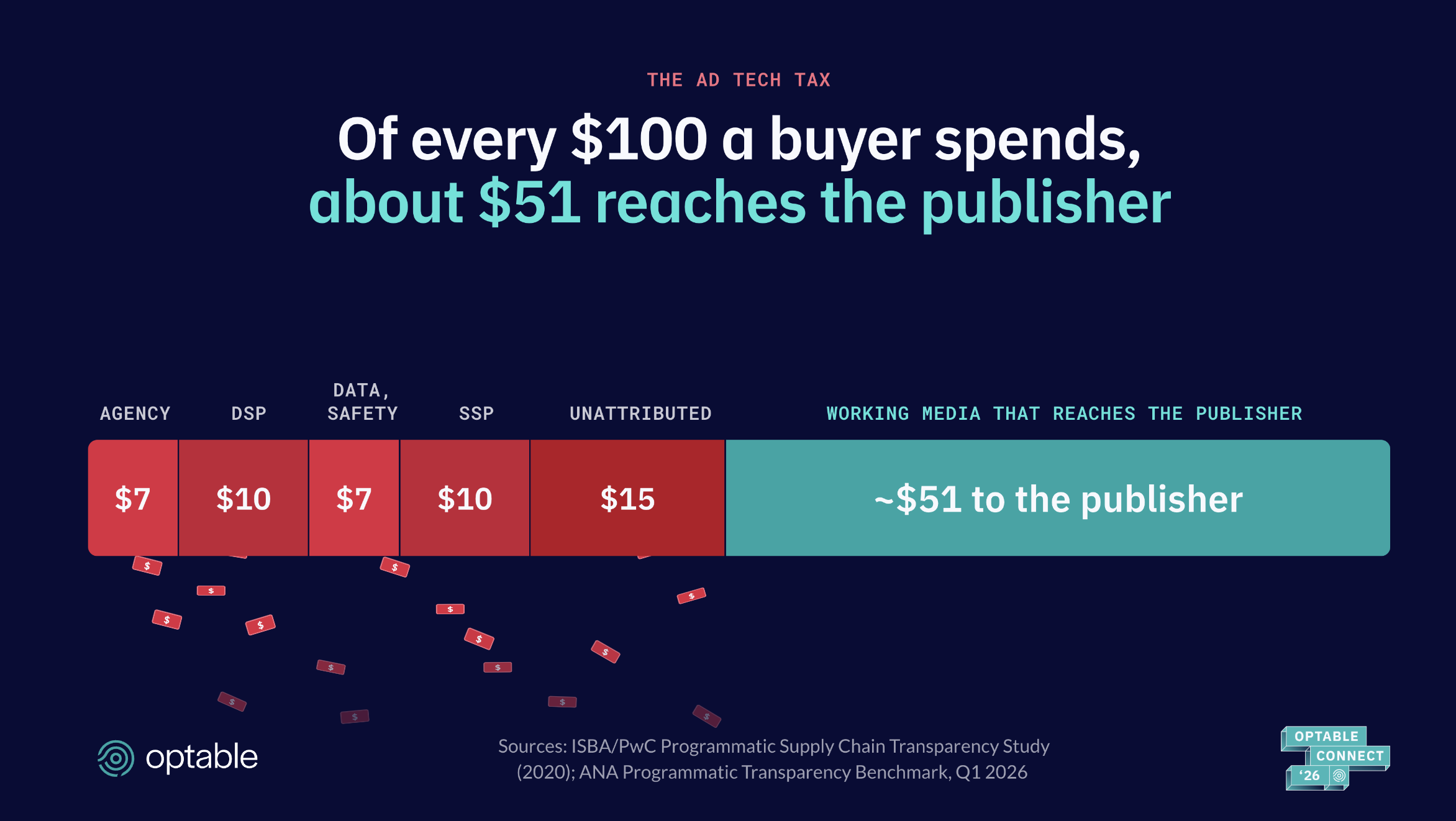
That’s the nature of the AdTech tax — a stack of technology providers that siphon off the cash flow meant for the people selling their inventory.
Agentic buying could course-correct the pattern. A buyer agent can send a brief straight to a publisher’s seller agent, which proposes matching products at the publisher’s price. Once the publisher approves, the deal gets booked within the publisher’s ad server. An agentic transaction reimagines the buy, with direct deals at programmatic speed and scale.
The risk is that every intermediary bolts on its own agent and keeps its cut, so the same tolls get collected at machine speed. A take rate makes that worse. When a marketplace takes its cut from what the publisher is paid, the deal value shrinks.
We chose not to build that into the Agentic Marketplace, because every dollar a marketplace keeps is money that never reaches the publisher. In short: direct contracts between buyers and sellers incur no additional charge; buyers who want advanced features like clearing pay extra.
No Take Rate for Publishers; No Meter on Briefs or Buys
Agentic connectivity is free for Optable Audience customers. No activation fee, and no charge per task, brief answered, or buy booked. The Agentic Marketplace doesn’t need a toll, because the platform is what publishers pay for.
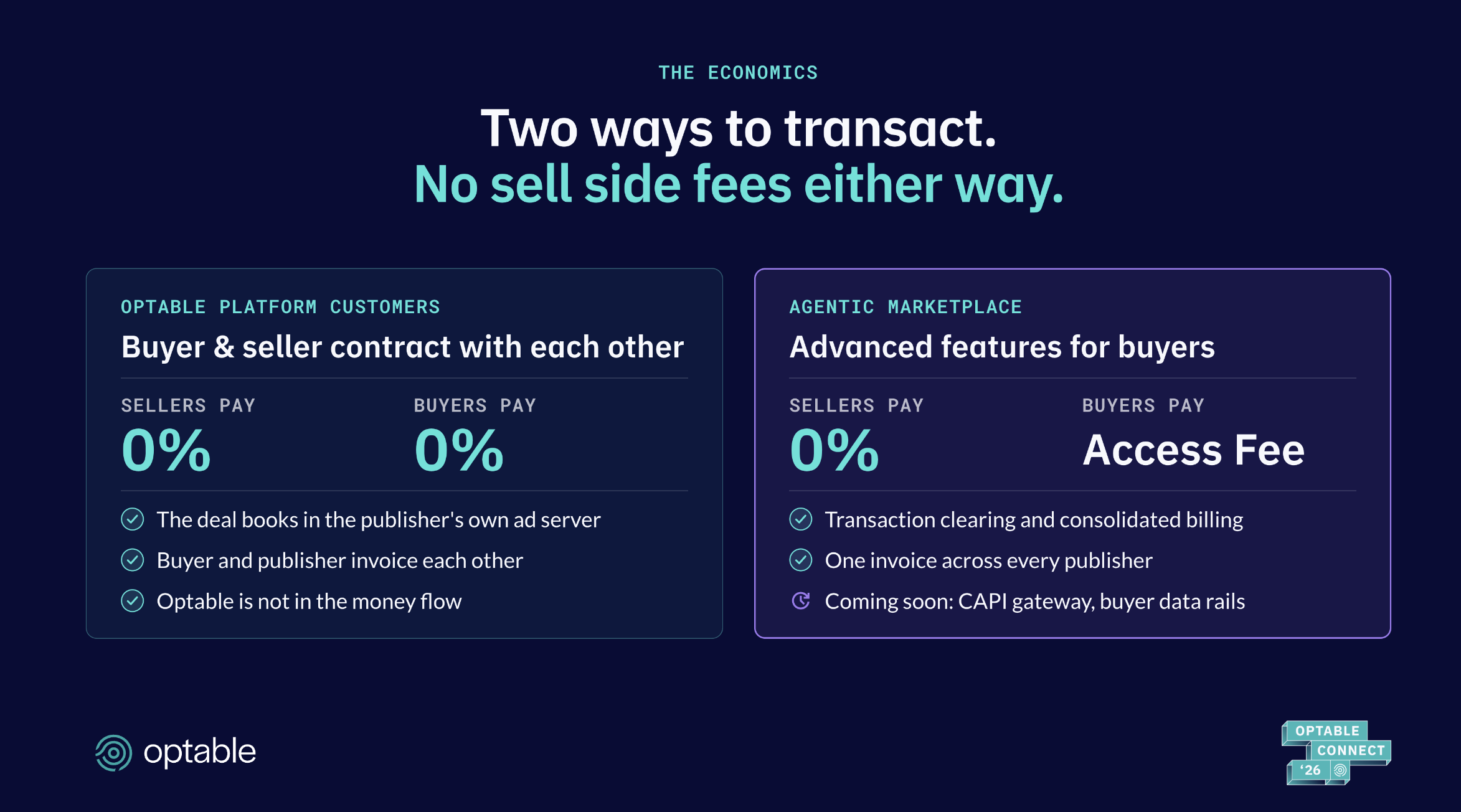
That leaves buyers and sellers with two ways to transact:
- Directly, between platform customers. Buyers and publishers contract with each other, the deal gets booked in the publisher’s own ad server, and each side invoices the other. Optable never touches the money.
- Through the Marketplace’s advanced features. Buyers who want additional features — such as transaction clearing, consolidated billing (one invoice across every publisher), buyer audience onboarding and targeting, and CAPI integrations — pay an access fee for those services. Optable handles the invoicing, and sellers still pay 0%.
Discovery is free for both sides. Optable’s revenue comes from software worth paying for, not a cut of what publishers earn.
Software should be paid for as software. — Vlad Stesin, CEO, Optable
What Buyers and Sellers Get Today
Onstage in New York, Andy Sharkey, VP of Product, and Chris Couture, Senior Product Manager for Agentic Advertising, walked a sample deal, end to end, through the Agentic Marketplace.
Representing the sell-side, Andy gave a brief tour of the Optable platform where sellers can build ad products (their inventory packaged against a price point). By using Optable as their storefront, sellers can make their inventory discoverable to buyers and their agents. So when a buyer submits a brief through the marketplace, they are presented with matching ad products from each consenting publisher.
Chris showed the Optable platform from the buyer’s perspective. A buyer can connect its buyer agent (including Claude, ChatGPT, or custom-built agents) to submit briefs to the Agentic Marketplace on its behalf. Then, the agent can identify media sellers that have opted in to being discovered by the buyer’s brand.
The buyer agent can then support campaign planning, with reasoning to back up its recommendations, and create a media buy for the planner to approve before sending it to the seller.
From there, the seller can approve the buy, send it to their ad server, and give the final say before it goes live. The Agentic Marketplace stands to shorten the timeline from brief to buy, reduce the number of intermediaries involved, and shrink the AdTech tax while restoring the direct buyer-seller relationships the industry was built on.
For sellers:
- Define products, pricing, and rules once, and buyer agents can discover them.
- Approve every buy and every creative before it runs. Approved buys book straight into a publisher’s ad server.
- Tap into new sources of demand, and see what buyer agents ask for, in their own words.
For buyers:
- Reach every publisher running a Sales Agent through one MCP connection, briefing from Claude, ChatGPT, or your own agent.
- Track every buy with delivery and performance across publishers in one view.
- Use seller audience data and insights or bring your own audiences to premium publisher inventory.
Coming next: A custom ad server connector and proposal management for sellers, plus buyer data rails and more for buyers.
Are You Ready For Agentic Advertising?
Of the attendees we surveyed at Optable Connect, more than half expect to run an agentic deal by the end of 2027, and another 25% have already run one. We built the Agentic Marketplace as a gateway to agentic buying and human-approved selling.
For publishers, the first step is small: pick one high-value package, price it, and put it in front of buyer agents. For agencies and brands, bring a live brief and connect the agent you’re already using.
The Optable Agentic Marketplace is available to pilot today. Talk with the Optable team to get started.
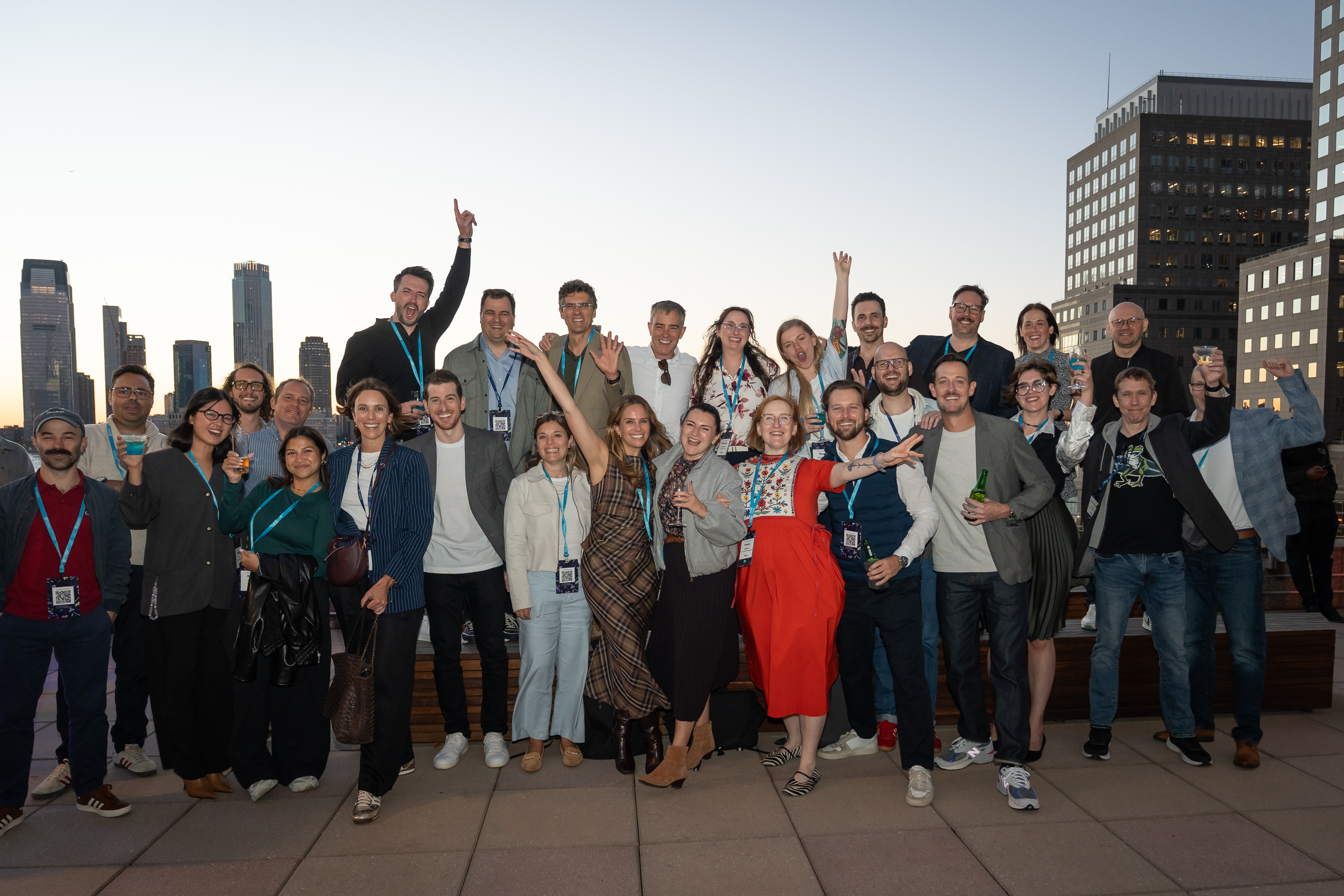
The lobby hummed with warm, friendly greetings and enthusiastic introductions as nearly 200 leaders from all sides of the advertising space converged at the People Inc. Auditorium in Lower Manhattan for Optable Connect NYC. Reunions and new connections alike shared in the early morning excitement over coffee, pastries, and the golden sunlight of a perfect October day.
Screens depicting a packed 8+ hour agenda complemented and endorsed the playful animations proclaiming that “Agentic advertising runs on Optable.” Throughout the hallway, brightly colored blocks seemed to bounce off the floor, drawing the eye and confirming that the forward-thinking, agentic-inclined attendees were in the right place.
As the clock inched towards showtime, the quiet auditorium saw a slow trickle of attendees that quickened into a flood, filling the space with soft murmurings of interest and anticipation. Then, with nearly 200 seats filled, the program could finally begin.
Patrick Viau, Optable’s CRO and emcee extraordinaire, opened the event with a congenial attitude, welcoming folks from the buy and sell sides, press organizations, analyst desks, and beyond. He quickly addressed the agentic elephant in the room: the buzzword that is “agentic” itself. But with the kind of confidence that easily erases doubt, he declared, “Agentic advertising is here.” The proof: people are already transacting agentically, and that pattern isn’t likely to slow down any time soon.
The day ahead would further support this claim, as agency representatives, publishers, platforms, journalists, analysts, and researchers covered how agentic deals restore the buyer-seller conversation, why data foundations come first, where humans stay in the loop, and how agentic grows alongside programmatic.
Optable’s CEO, Vlad Stesin, took the stage next, with a note of appreciation for Patrick’s energy and the transformative effect he’s had on the company since joining, as well as a slight condemnation of Patrick’s alleged propensity for hugging. Vlad then built on the foundation Patrick laid, expressing that “advertising is about to be run by software that talks to other software, on top of software it trusts.”
That’s the future of advertising Optable is building towards.
The Case for Agentic Advertising
Earlier this year, the speakers at Optable Connect Toronto agreed that agentic advertising had arrived. Those of us in New York last week tackled some important follow-ups: what does that look like in practice, and what does the market need in place, on both sides, to make it work?
Vlad's answer started with what programmatic left behind. Scale came at the cost of context, and with it the direct conversation between advertiser and publisher. “Agentic advertising puts context back into the transaction,” he said, and with it, direct deals “stop being a privilege of the biggest players.”
He was just as clear that technology alone won't carry the shift: “Disruption isn't about the availability of new technology. It's a change in behavior.” Optable's role, in his framing, is to bring order to signal chaos: “We're building the foundation for a new era of transactions.”
Next to the stage: Co-Founder and CPO Bosko Milekic, VP of Product Andy Sharkey, and Senior Product Manager Chris Couture. Bosko opened with the question Optable has asked all year, “Are you agent-ready?”
Andy described agentic advertising as direct IOs with the success of programmatic, where Optable is the storefront for sellers to create their ad products. He and Chris walked through an end-to-end media buy in which agents share data without exposing it, plan the campaign, and prepare the order. Every step up to the buy is automated, and nothing goes live until a person approves it.
The announcement that drew the biggest reaction: the launch of the fee-free Agentic Marketplace for buyers and sellers, with access fees for buyers who want advanced features.

From there, the agenda widened from Optable's roadmap to the market as a whole. A few threads ran throughout the day’s sessions, across media buyers, sellers, analysts, and industry experts. Each one is worth considering for your 2027 planning.
Agentic Deals Restore the Advertiser-Publisher Conversation
“Programmatic was a huge innovation,” Credera's Rio Longacre said during a session on what agentic can learn from programmatic. Programmatic scaled the transaction and automated the planning. Bosko named what the innovation cost: the best campaigns combine brand and media company knowledge, and that conversation had no place in an automated auction. Buying from a “soup of impressions” has left little transparency, and advertising has been optimized for volume over impact.
Agentic stands to bring the conversation back. “Agentic is about these buyer and seller conversations,” said AdExchanger's Anthony Vargas. Mediavine CRO Amanda Martin put it in human terms: “This industry runs on relationships,” and when buyer and seller agents talk, buyers and sellers are talking.
EMARKETER's Yory Wurmser added a market view: AI will first benefit the walled gardens, he said, but agentic, as an extension of direct demand, can level the field for smaller players, as well.
Restoring the conversation also changes the economics. Rio said that “things haven't gotten better for publishers” since programmatic because incentives aren't aligned, and RTB supply keeps rising while publisher traffic falls. Amanda's ask of the buy side was direct: “We need the buy-side to push the middlemen out.” Goodway Group is already moving that way, with fewer SSPs and more direct publisher connections since building Passport One on Optable.
Data Foundations Decide Who’s Ready for Agents
If one piece of advice came out of nearly every session, it was this: agents are only as useful as the data underneath them. “All of these decisions start with data,” Newton Research's Matt Emans said. He warned that throwing an agent at any task “isn't always the best course of action” until you understand the data and methodology behind it.
Involved Media's Shukmei Wong agreed, expressing that users shouldn’t blindly trust AI outputs, especially if they haven’t vetted their data first. What everyone wants, she said, is “a clean line and an understanding of identity.”
The room's own answers backed them up. In the live survey, more than a quarter of participants said their data and systems aren't ready for agentic buying and selling. Google Cloud's Bora Beran made the same point from the infrastructure side: “You have to provide clean data and enough context to the model,” and a good foundation makes everything after it easier to scale. Yory's checklist for agentic readiness included getting data organized in a way agents can use.
The day's final panel showed what that looks like for publishers. Panelists noted that the way inventory is described today, with simple labels like “sports” or “lifestyle,” misses the richer, more nuanced signal buyers want.
Amanda's advice: “Invest in the data foundations,” starting with a deep dive into your own signal treasure trove. Hearst's Dave Lundell described that foundation as ongoing work, built for what you're doing today and what comes next. It's also where Optable started the day: Vlad described Optable Audience Agent as a way of “turning passive data into an active asset.”
Agents Do the Legwork; Humans Approve the Deal
Goodway Group CEO Paul Frampton-Calero shared the impact of strategically adopting agentic tools. Using Optable Audience Agent, he reported that his team goes from a brief to audience segments in under an hour, work that could take days or weeks by hand, and some of those agent-built audiences delivered better ROAS than the alternatives. The time saved goes back into strategy. Matt Emans described the same shift across the industry: 12 to 18 months ago, the focus was on time savings, and now it's on better outcomes and measuring more often in addition to efficiency.
The need is just as clear on the sell side. “A week between brief and buy is optimistic,” Amanda said of today's direct-deal process. Unity's James Prudhomme noted that a model “can consider a much, much wider set of audiences” than a manual workflow.
None of that takes people out of the deal. Two-thirds of survey respondents said they want agents to have more freedom to negotiate and prepare orders, with people finalizing and approving them, not full autonomy. The workflow Andy and Chris demoed still ends with a person approving the order.
Heather Carver, of tvScientific by Pinterest, urged attendees to treat AI as “a copilot, not on autopilot,” and Shukmei urged teams not to assume an LLM's first answer is correct. On the sell side, speakers on the signal panel argued that human-in-the-loop makes sales teams more valuable, since relationships still close the deal.
Early But Not Premature: Agentic Grows Alongside Programmatic
Of the 105 attendees who participated in the live survey, 76% lean positive on agentic advertising, and 94% have already run an agentic direct order or plan to by the end of 2027. For most, though, that first order is still ahead: 51% expect it in 2027.
The most-cited hurdle was people, not tools: 37% named internal organizational readiness as the factor holding them back from agentic adoption. “It takes a long time for people to change the way they behave,” Yory said, and Rio agreed: there's no wholesale disruption yet, but “there is AI in every pitch.”
What's taking shape is a layer that works alongside programmatic. Yory pointed out that agents can improve programmatic, too, with better signals, faster decisioning, and more transparency. IAB Tech Lab CEO Anthony Katsur described AAMP as an extension of existing standards, and said agentic standards are being built to support both direct and programmatic buys.
Paramount's Derek Nicol reminded the room, “We're an industry built on great standards.” With AAMP and AdCP increasingly overlapping, Yory and Bosko both argued that interoperability matters more than which protocol wins.
Early doesn't mean there's time to wait. During the survey, a buy-side attendee warned that buyers aren't holding off while publishers wait for the money to show up first. In their view, publishers who build now will be part of the agentic equation, and those who wait risk being left out. Paul's advice to publishers was practical: identify and prioritize the agency partners with an appetite for agentic.
Session-by-Session Breakdown
Here's a closer look at what each session brought to the stage, picking up threads from the themes described above.
Own Less, Orchestrate More: Partnering Without Owning the Stack
Vlad Stesin, Optable, with Paul Frampton-Calero, Goodway Group
Paul explained why Goodway wanted an intelligence layer that works horizontally across the ecosystem, and why it built Passport One on Optable instead of trying to own every piece.
“You don't need to own everything yourself.” — Paul Frampton-Calero
With Optable Audience Agent, his team now goes from brief to audience segments in 30 minutes instead of days or weeks, and some of those audiences reportedly delivered 40% better ROAS.
Ground Truth for Agents
Vlad Stesin, Optable, with Matt Emans, Newton Research, and Shukmei Wong, Involved Media
Matt and Shukmei agreed that agentic decisions start and end with data, and that agents deliver the best results when teams understand the data and methodology behind them.
Matt described agent pipelines that read signals across surfaces to surface insights a person would miss, while Shukmei cautioned that “AI can't automatically fill in the gaps for you.”
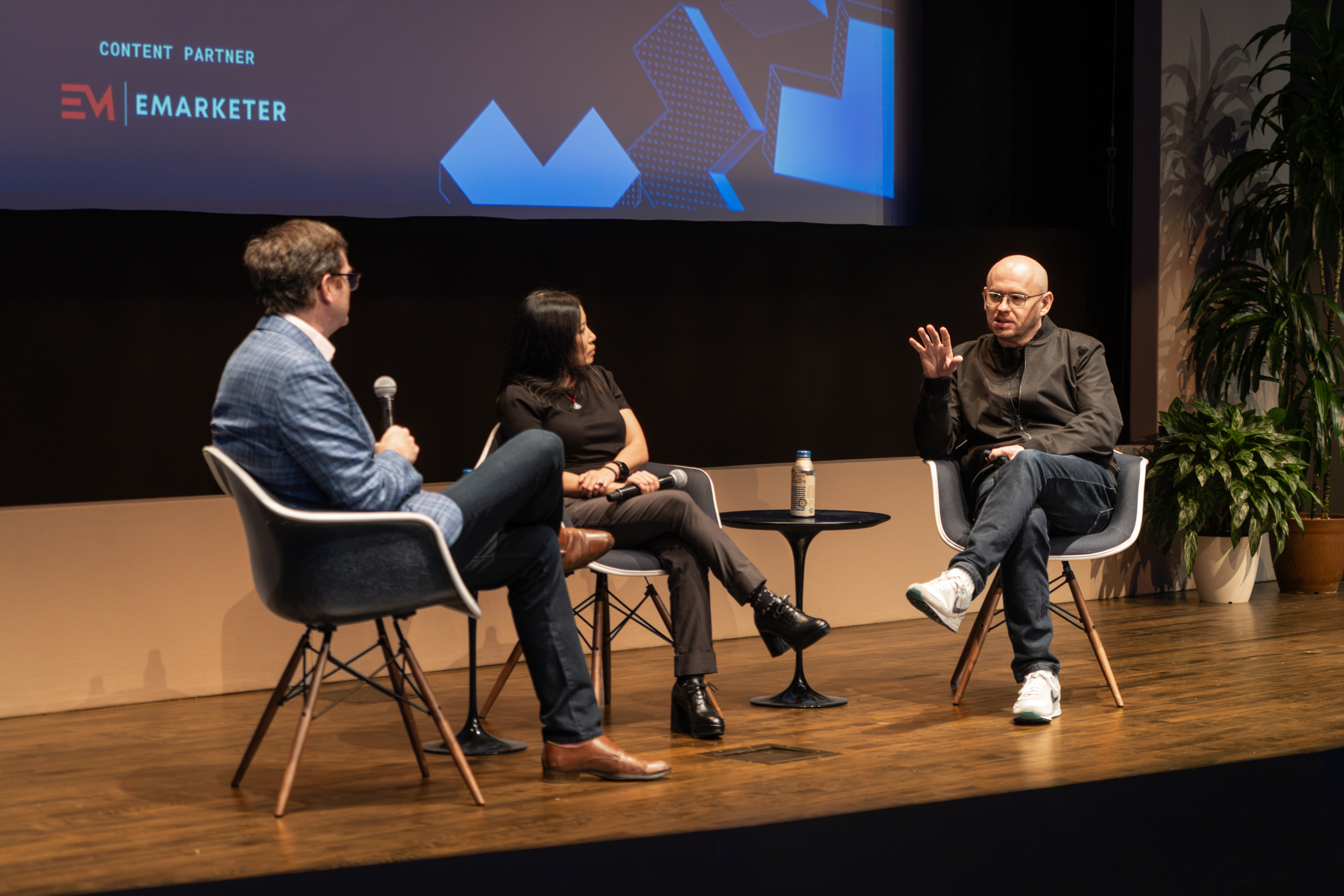
From Plan to Reconciliation: Inside IAB Tech Lab's AAMP
Anthony Katsur, IAB Tech Lab, and Derek Nicol, Paramount
Katsur explained how IAB Tech Lab's Agentic Ad Management Protocol (AAMP) builds on existing standards and taxonomies to support both direct and programmatic buys, and how IAB Tech Lab's “early, but not premature” agent registry will add trust and transparency. Nicol called standards “the building blocks of success” and urged attendees to ask their vendors how they’re incorporating AI into their product roadmaps.
From Programmatic to Agentic: How AI Could Re-wire Media Buying
Yory Wurmser, EMARKETER
Yory argued that AI will first benefit the walled gardens, but agentic, as an extension of direct demand, can level the field for smaller players and make programmatic more efficient.
His advice: be specific about what you want from agentic, set clear governance rules, get your data ready, and experiment.
What Agentic Buying Has to Learn From Programmatic
Anthony Vargas, AdExchanger (moderator), with Rio Longacre, Credera, and Bosko Milekic, Optable
Rio acknowledged how innovative programmatic has been but said incentives aren't aligned, leaving publishers stranded. Bosko described what agentic has the potential to restore: a conversation between what a brand knows and what a media company knows. He called for interoperability so agents can talk regardless of which protocol wins.
Are You Agent-Ready? A Live Audience Survey
Andrew Dumas and Andy Sharkey, Optable
Andrew and Andy polled the room live on agent readiness and agentic advertising. 105 attendees answered live, most representing publishers and sell-side tech. Of the respondents, more than three-fourths lean positive on agentic advertising. In fact, 94% have already run an agentic direct order or plan to by the end of 2027.
Between questions, one buy-side attendee recommended publishers keep up with the agentic shift. Another attendee increased the pressure, highlighting their own success in running agentic deals.
How Unity Made Its Gaming Audience Addressable and Omnichannel, With Optable and Google Cloud
James Prudhomme, Unity, Bora Beran, Google Cloud, and Marc-Olivier Thibault, Optable
James made the case that stable addressability future-proofs Unity's business, and described using Audience Agent to build segments from a far wider set of audiences than human intuition could consider. Google Cloud's Bora Beran described AI as a companion that works only as well as the data and context it's given.
Making the Most Valuable Signals Easier to Buy
Crystal Jacques, Optable, with Heather Carver, tvScientific by Pinterest, Dave Lundell, Hearst, and Amanda Martin, Mediavine
Each panelist described their most valuable signal — Pinterest's commercial intent across visual search and shopping, the trust of Hearst's readers and viewers, and Mediavine's contextual data — and agreed that flattening it for programmatic loses the context buyers want. Their shared advice: invest in your data foundation, and describe your inventory so agents can read it.
Closing Remarks
Andrew Dumas, Chief Business Officer, Optable
Andrew pulled the day together, describing Optable as “a company of builders” that builds “brick by brick,” highlighting the “freegentic” model announced for Optable’s Agentic Marketplace. He thanked speakers for contributing, encouraged guests to connect with the team, then sent everyone out to the terrace.
Next Steps for Agentic Advertising
Whether you buy media or sell it, most of the work happens before an agent ever touches a campaign. Based on what we heard, here's where to start this quarter:
- Audit your data foundation. Find out what valuable signals you have, evaluate how they’re structured, and adjust so an agent could read them.
- Pick one workflow to automate, with a human approval step. Decide whether to build, buy, or partner on it this quarter, and name who owns it.
- Get fluent in the standards. Know where AAMP, AdCP, and MCP each fit in your workflow before a partner or buyer asks.
- Ask your partners where they stand. Find the agencies with an appetite for agentic, and ask your vendors how AI fits in their roadmaps.
Optable is Building the Infrastructure for What Comes Next
Vlad opened the day with a picture of advertising “run by software that talks to other software, on top of software it trusts.” Over the sessions that followed, the room heard what that trust rests on: data that agents can read and transact against, with a person approving every deal.
That's the foundation Optable is building.
Optable provides the identity infrastructure, data collaboration, and agent-to-agent tooling, including Optable Audience Agent and Sales Agent, that let publishers and agencies act on these ideas.
Earlier this year, we shipped our agentic signals layer to put them to work. Now, we’re inviting publishers, platforms, agencies, and advertisers to participate in our Agentic Marketplace, where buyer agents and seller agents can transact directly — faster deals, better-fit audiences, and buyers and sellers back in conversation.
Wherever your team is on agentic, we're ready to build with you.
Thank you to every speaker, partner, and attendee who closed out Advertising Week New York with us and made the trip worthwhile.

Originally published on LinkedIn
For the last decade or more, audience planning has lived on the buy side: in programmatic platforms like DSPs, DMPs, and licensed audience-graph tools owned and operated by marketers. Brand managers and planners build audience profiles, forecast reach, and model spend inside tools like DV360, The Trade Desk, and Amazon DSP where the activation actually happens.
The challenge is these platforms have slowly been reducing their holistic visibility into audience data as the promise of a large, open auction for all digital audiences fades away and fragments from new innovation. That said, before programmatic planning happened in spreadsheets, with publishers doing meaningful research, packaging insights, and meeting buyers where they were thinking about audiences.
A lot of linear TV and terrestrial radio still works this way: large research organizations on the sell side provide demographic, behavioral, and contextual insight directly to advertisers as part of the proposal process. We're not talking about hyper-niche attributes like "left-handed golfers in Wisconsin," but structural ones like age, gender, income, location, and household composition.
Agentic media buying is going to swing the pendulum back in that direction.
What Audience Planning is All About
Audience planning is actually two functions that are going to become increasingly intertwined.
- Audience construction: Who are we trying to reach, what attributes define them, and what data sources support that definition.
- Forecasting and allocation: Against that audience, what inventory exists, what does it cost, and how we sequence spend to deliver outcomes
Today, both functions have been pulled into buy-side platforms. Buyers love this because it's one tool and one workflow with a single log-in.
The trade-off, which usually goes unacknowledged, is that buy-side audience planning relies on data that has been hopped, modeled, and matched several times before it lands in the planning surface. As cookies deprecate, MAIDs decay, and identity fragments further, data quality keeps quietly declining.
Where the Sell-Side Comes In
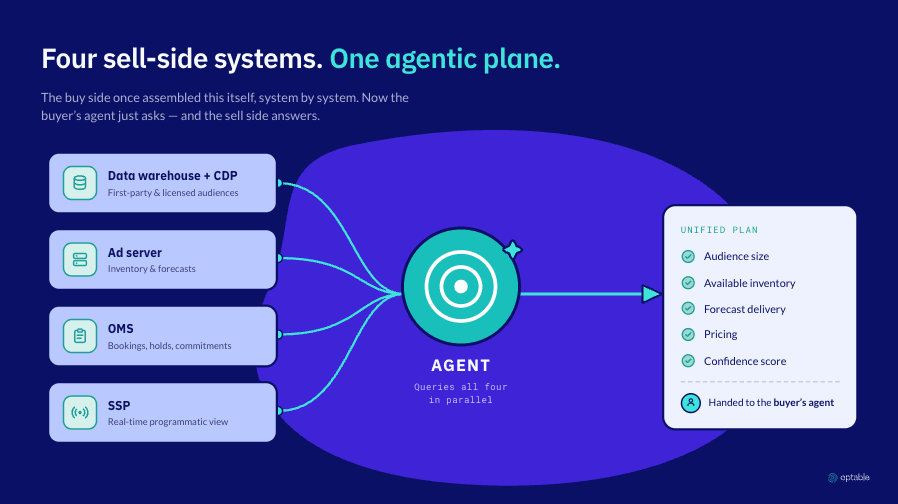
The simple truth is this: Sellers have always had better raw data. The problem is that the data lives in different systems that are hard to plan against in a unified way:
- A data platform or warehouse holds licensed research data.
- A CDP holds first party audience insights.
- The ad server holds available inventory and forecasts.
- The OMS holds bookings, holds, and direct-sold commitments.
- The SSP holds the real-time, programmatic market view.
Responding to an RFP means looking across all four. Most sellers don't have a single tool that brings them together; they might have a planner, SQL queries, and a spreadsheet. That fragmentation has made it nearly impossible for the buy side to deliver a quality planning experience to advertisers.
What Agentic AI Brings To the Table
Agentic workflows are built for this.
Consider what an inbound RFP looks like now versus what it could look like with an agent in the loop.
A buyer sends a brief that includes target demographics, interests, platforms, budget, and timeline. Traditionally, that brief sits with a team that:
- Builds the audience against the publisher's both first-party and licensed data.
- Checks the ad server for forecasted impressions against that segment.
- Pulls the OMS to see what's already committed against the same inventory.
- Queries the SSP for programmatic backfill.
It might take multiple people several business days to tackle the assignment. The audience definition can get simplified along the way because custom segments are too expensive and labor-intensive to build by hand or the forecasting is too hard to analyze.
But in an agentic workflow, the brief comes in, and the agent queries the four systems in parallel before recommending audiences from first-party data based on the buyer's parameters. It will then return a plan with audience size, available inventory, forecast delivery, pricing, and confidence scores in a fraction of the time it would take otherwise.
The audience proposal matches the brief instead of getting flattened to fit what the planner can manually build, and the team has more time to dedicate to strategy. Everybody wins.
Why All of This Matters
When that capability gap closes, the publisher's structural advantages reassert themselves:
- The data is proprietary, first-party, and licensed or matched at the source.
- Inventory forecasts come from the system of record, not approximations.
- Pricing and availability reflect true commitments instead of market guesses.
- Cross-format planning (direct, programmatic, curated) becomes coherent.
A publisher that can respond to ten RFPs in the time it used to take to respond to three, with audiences built to order instead of approximated, becomes a valuable partner to the buyer. The streamlined planning experience that agencies have been getting from buy-side tools becomes available from the sell side with better underlying data.
And the best part is that agentic audience workflows are already being deployed. Publishers can start taking advantage of agentic-empowered audience creation and RFP responses today.
Proof in the CTV Market
To understand the CTV land grab, start with currency. For decades, television ran on one: Nielsen. A single panel produced the numbers buyers and sellers agreed to plan against, transact on, and measure by. Whatever its flaws, it was a shared source of truth for the entire market.
Streaming broke that. No single panel sees across Netflix, Disney+, Roku, Amazon, and YouTube, and each one holds its own logged-in viewing data and reports on its own terms. The shared number fractured into many. Nielsen ONE, Comscore, VideoAmp, and iSpot now compete to measure the same impressions, while the largest platforms increasingly measure themselves.
For a buyer, that means planning a CTV campaign no longer starts with one currency. It starts with reconciling one set of data sources to define the audience, another to activate against it, and another still to measure what happened, most of which disagree. When there is no shared currency, the advantage moves to whoever owns the most trustworthy data and the surface that plans on top of it.
That is what the moves from earlier this year are really about. Look at what happened in the in the last quarter:
- Walmart bought a performance CTV company, Vibe.co and also launched Connect Select, a streaming TV marketplace inside Walmart DSP powered by its Vizio acquisition.
- Pinterest launched a CTV audience-extension product on the back of its tvScientific acquisition, opening its monthly user base to third-party streaming inventory for the first time.
- Meta is reportedly meeting with Magnite, FreeWheel, and TV OEMs about plugging its demand into living-room inventory.
- PayPal launched Curated Ads, putting transaction data into CTV targeting and measurement.
- Roku unveiled Roku Curate, a roster of commerce data partners including Best Buy Ads, Fandango, Criteo, Fetch, Kroger Precision Marketing, and Instacart.
Each of those players is positioning itself to be the audience-planning center of gravity for CTV, and each leads with something different: intent, purchase data, identity, device data, transaction data, and commerce-graph partners. Individually, none of those signals give buyers everything they want. Whichever platforms combine the most signals behind a single planning surface will be the ones that reap the rewards.
This is the same dynamic that played out a decade ago. Meta and Google won because their audience platforms made buying so frictionless that buyers stopped wanting to plan anywhere else. The CTV race is the rerun, but with the sell side better positioned this time, because the data quality and identity advantages live with the publishers and platforms rather than with third-party graphs.
What Happens Next
Data is becoming the great CTV differentiator as inventory commoditizes. The advantage now moves to whoever owns the audience, the data, and the planning surface that sits on top of them.
If the most accurate, highest-fidelity audience planning lives on the sell side, the buyer's job becomes orchestrating across multiple sell-side environments rather than working inside a single buy-side seat.
Three things to watch:
- Which publishers and platforms unify their internal stack behind a single agent-addressable interface, ideally one that speaks AdCP or an equivalent standard. They will be the ones buyers consider essential in plans.
- Which holding companies build orchestration layers across multiple sell-side environments.
- Which large platforms become audience-planning hubs for streaming.
Audience planning has lived on the buy side for a decade because publishers couldn't deliver it at the pace buyers needed. Now, the publishers and platforms that treat audience planning as a core capability, and adopt agentic AI to make it sustainable at scale, will be the ones that buyers plan around.
Programmatic CPMs have been under pressure for years. More inventory, better floor prices, and additional SSP relationships haven’t made a dent, because these tactics skirt around the root of the issue.
Declining CPMs are, in part, a result of publishers gradually ceding control over how their inventory is packaged, priced, and sold. Sell-side curation is how publishers take that control back.
What Is Curation?
Curation is the practice of packaging inventory and audience data into deal products that buyers can target directly via a Deal ID within their preferred DSP. Sitting between publishers and advertisers, a curator assembles inventory based on audience signals, contextual criteria, or quality thresholds. Buyers target the Deal ID like any other inventory.
Historically, curation happened inside the DSP. Buyers and intermediaries controlled the logic behind curated packaging; the publisher was rarely, if ever, involved in decisions about how inventory was selected, combined, and priced.
But curation can happen on the sell side before the auction begins. That shift gives publishers more control over how their inventory is packaged and ensures buyers have access to premium inventory.
Benefits of Sell Side Curation
When curation happens on the buy side, the packaging intelligence and the margin from that activity accrue to the intermediary. Publishers provide the inventory data but have limited visibility into how it's assembled, what signals are applied, or what the buyer ultimately paid.
Sell-side curation reverses that dynamic, which compounds into benefits on both sides of the ecosystem.
For Sellers
- Control over targeting logic: Publishers define the audience, apply quality thresholds, and set pricing themselves, rather than leaving those decisions to an advertiser or intermediary.
- Margin retention: The value generated by packaging and curating publisher audiences stays with the publisher.
- Real-time decisioning: Sell-side curation can happen in as little as 10 milliseconds versus 100 or more on the buy side. This processing speed allows smarter pricing before the auction and continuous reoptimization as attributes change.
For Buyers
- Cleaner supply paths: Fewer intermediaries between the buyer and the impression means better data signal integrity and less bid duplication.
- Greater transparency: Curated supply gives buyers clearer visibility into where impressions originate, how inventory is packaged, and which signals are used.
- More consistent outcomes: Pre-qualified, high-signal supply reduces the need for heavy DSP-side filtering and the cycles that waste budget with costly guesswork.
The end result: Publishers capture more of the value their premium audiences generate, and buyers get access to cleaner, more reliable inventory.
Hallmarks of a Well-Structured, Curated Deal
The deals that command premium CPMs go further, combining audience precision with quality signals that give buyers confidence in who they're reaching and where the impression runs. Defining characteristics include:
- A well-resolved, enriched audience: Layering in third-party demographic, behavioral, and intent signals adds audience depth and specificity, giving buyers the confidence to bid aggressively.
- Quality controls applied before audience mapping: Applying quality filters before matching users to a segment means every impression must meet brand and environment standards, resulting in better-fit audiences than traditional curated deals can offer.
- Flexible deal packaging: One audience can power multiple deal types, like broad reach and premium quality placements, without rebuilding segments.
- Multi-SSP activation under a single Deal ID: Activating the same audience package across SSPs and other destinations drastically reduces the manual overhead of building and managing deals individually per SSP.
Agentic Workflows Enable a Curation Revenue Strategy
Building one well-structured curated deal is manageable, if time-consuming. Accomplishing it across a growing library of deal products, and keeping each updated as audience data accumulates and campaign requirements shift, is where most teams run out of steam.
Sell-side agents help publishers mitigate that gap by expanding audience addressability. Agents can draw from enriched audience data and available inventory to propose and refresh curated packages in real time. By cross-referencing signals and surfacing combinations agentically, sell-side agents reduce the manual effort and time commitments required to create and sustain these curated audiences.
Agents can also make curated deal products automatically available to buyer agents searching for relevant inventory, based on parameters the publisher has already defined.
With agents handling the operational weight of building and maintaining deal products, curation stops being a reactive exercise and starts functioning as a continuous revenue strategy. The publisher's audience intelligence compounds with every campaign rather than getting rebuilt from the ground up each time.
Curate Your Premium Inventory On Your Terms
Sell-side curation is a fundamental shift in where publisher value sits in the programmatic supply chain. Instead of having limited visibility into how their inventory is packaged and sold, publishers gain active control over more layers of the deal.
The publishers who build agentic, audience curation infrastructure now are the ones who will compete for premium demand on their own terms, rather than waiting to see how buyers choose to package their supply.
Optable brings the full stack together: enriched audiences, quality controls, multi-destination activation, and the agentic layer that makes it sustainable at scale.
Ready to build a scalable curation strategy? Schedule a demo today.
When a buyer requests a niche audience, publishers can usually intuit if they have users who match the profile. But whether they can verify, size, and package them with enough precision to act on the deal depends on their data infrastructure.
Publishers have the right audiences; they just don’t always have the tools to confirm who fits, enrich the signal, and package them with confidence.
AI is already clearing that roadblock. By drawing on behavioral signals, contextual patterns, and third-party attributes alongside first-party data, AI tools can help publishers verify and size audiences that previously fell below the threshold of what publishers could confidently sell.
Where First-Party Data Alone Can’t Reach
First-party data is the most valuable signal a publisher owns, but it has structural limits that become apparent the moment an advertiser asks for precision at scale.
Most publishers can only identify up to 30% of their audience with their first-party data, according to Optable's State of Audience Data Monetization report with Digiday. The majority of traffic remains anonymous, which means addressable segments are already working from a reduced starting point before any targeting requirements are applied. The qualifying pool shrinks further when an advertiser adds specificity, such as a particular income bracket, a purchase intent signal, or a geographic constraint.
The compounding effect on revenue:
- Niche segments that exist at small scale get passed on rather than proposed, creating revenue losses that never appear in deal reporting.
- Publishers who can't fulfill at scale water down audience requirements to hit volume targets, reducing the precision that made the segment worth buying in the first place.
- Campaigns that should be winnable go to competitors with larger or more enriched audience graphs.
How Small Audiences Can Punch Above their Weight Class
Even when an audience is small or your site traffic is down, you can monetize your audience effectively. The following approaches can expand what's addressable without compromising what made the original segment valuable.
Signal Enrichment
Enriching your identity graph with third-party signals is the most direct path to expanding what you know about your audience. First-party behavioral data tells you what someone did on your properties. Third-party enrichment tells you who they are, what they own, what they're shopping for, and where they are in a purchase cycle.
Optable's attribute taxonomy includes approximately 800 segments covering demographic, behavioral, transactional, and in-market intent signals sourced from partners including LiveRamp, Experian, and TransUnion. When layered onto a publisher's first-party graph, these signals transform a narrow behavioral audience into a richer, more addressable one.
A segment solely defined by content engagement can become a segment informed by content engagement as well as income range, household composition, purchase intent, and more. The enriched audience is a fundamentally more valuable product for advertisers and a larger qualifying pool for the publisher.
Lookalike Modeling
When a high-value audience segment is too small to fulfill a campaign, lookalike modeling identifies the shared behavioral patterns, demographic attributes, and intent signals to broaden the audience.
The approach works within a publisher's own data environment and through clean room collaboration with an advertiser or partner. In the latter case, the overlap between a publisher's first-party data and an advertiser's customer list becomes the seed audience. The model expands outward from there, finding similar users across the ecosystem without either party exposing raw data to the other.
In either scenario, the output is a modeled audience segment ready for activation that extends the reach of the original without sacrificing the precision that made it worth building.
AI-Enhanced Audience Discovery
Where enrichment adds depth and lookalike modeling adds reach, AI-enhanced audience discovery expands what the publisher can find within their own data.
Optable's Audience Agent can take a seed audience and propose expansion strategies based on the signals available in the enriched graph, relaxing income thresholds, broadening intent signals, substituting behavioral proxies for signals that are present in the seed but underrepresented at scale.
Each expansion path comes with a confidence ranking, giving the sales or planning team a clear view of which approaches maintain the original segment’s characteristics and which trade precision for volume. This would take a data analyst hours of manual permutation testing, but an agent can surface this information in minutes, with transparent reasoning at every step.
Expand Your Audiences Without Diluting Data Quality
A modeled or enriched segment that looks bigger but performs worse doesn't solve the addressability problem. It damages the advertiser relationship and hinders campaign success.
Confidence scoring on AI-proposed expansion paths gives teams the ability to evaluate which strategies preserve the intent and behavioral characteristics of the original seed before they propose anything to an advertiser. Trait indexing shows how an expanded audience compares to the original on every attribute in the graph, so publishers can demonstrate that a scaled-up segment still indexes strongly against the signals that made it worth buying.
Expanded Audiences Lead To Bigger Deals
Expanding addressable reach affects which deals a publisher can compete for, not just how many they can fulfill. The impact shows up across four areas of the revenue operation:
- CPM and deal type: Larger, more precisely defined audiences qualify for higher CPMs and make publishers more competitive for programmatic guaranteed and direct-sold campaigns.
- RFP win rate: When a seed audience is too small to fulfill a brief, an Audience Agent proposes expansion paths in real time rather than passing on the opportunity.
- Budget access: Lookalike modeling and collaborative audience matching open budget categories that require audience precision to access.
- Compounding value: Every expansion that performs well builds the data story for the next campaign, strengthening the publisher's case with each renewal conversation.
Your Audience is More Powerful Than You Think
Publishers who combine a strong first-party foundation with third-party signal enrichment, lookalike modeling, and AI-assisted audience discovery are competing for a fundamentally larger pool of advertiser demand.
Optable brings all three expansion mechanisms and more together in one platform, with the agentic layer that makes them actionable at machine speed.
Schedule a demo to see firsthand how Optable’s AI-powered solutions can help you expand your addressable universe.
Data Management Platforms (DMPs) have helped publishers turn audience data into revenue for more than a decade.
They solved an important challenge: collect signals, build segments, and make those audiences available to buyers. That model worked when digital advertising revolved around browser-based targeting, cookie-driven activation, and a relatively simple idea of what publisher data was supposed to do.
But those expectations have changed alongside the convenience and reliability of walled gardens and the mass adoption of AI tooling. What’s expected of publishers today is exponentially more than it used to be, and publishers need the right infrastructure to keep up.
Where Traditional DMPs Fall Short
Traditional publisher DMPs emerged to organize audience data and activate segments against demand. They collect data, associate users with signals, build segments, and pass those segments into ad servers, SSPs, DSPs, and other activation systems. For many publishers that workflow still applies, and DMPs perform well around web-based audience packaging and existing Ad Ops processes.
Audience creation is now only a part of what publishers manage. They are expected to curate niche audiences for buyers and to do it at machine speed across multiple platforms. The ecosystem they navigate has grown more complex:
- Identity across multiple frameworks and alternative IDs
- Omnichannel inventory spanning web, app, CTV, audio, and gaming
- Advertiser and retail media collaboration without exposing raw data
- Privacy-preserving data-sharing requirements
- Signal enrichment and addressability in the bidstream
- AI-assisted and agentic workflows for planning, activation, and measurement
- Faster RFP response cycles and more custom audience requests
Each of these depends on a foundation that understands how identity works across systems, partners, and channels. A DMP on its own does not meet these demands. Publishers need better identity infrastructure to satisfy buy-side expectations.
Don’t Treat Audience Tools as Identity Platforms
Identity platforms and audience tools are undeniably related, but they serve distinct functions. Audience platforms allow publishers to identify who to include in segments and where to activate their audiences. Identity platforms answer broader questions, such as:
- Who is this individual across channels and devices?
- How should different identifiers relate to each other?
- How do we collaborate with partners without exposing raw data?
- How do we support new activation paths as buyer requirements change?
- How do we give AI agents a trusted data layer to work from?
Most publisher monetization workflows depend on identity: Audience building, signal enrichment, clean room collaboration, omnichannel addressability, and AI-powered audience discovery all depend on a robust identity foundation.
Relying solely on a DMP for audience creation is becoming unsustainable. The demands for speed, accuracy, depth, value, and compatibility with agentic AI require publishers to re-evaluate their platforms and the foundation they’ve built upon.
The Publisher Workload Goes Beyond the Web
The old DMP world was built for a single-channel ecosystem. The modern publisher business is increasingly expanding to a cross-channel and omnichannel approach.
Web audience activation still matters, but it’s no longer enough.
A publisher may need to monetize authenticated readers on the web, anonymous visitors in Safari, app users, CTV viewers, podcast listeners, and gamers in environments where browser-based workflows do not work.
If each channel requires a different identity workflow, data model, and activation process, the publisher ends up dealing with more fragmentation. The result is more operational work, less consistent addressability, and a weaker first-party data story for buyers.
This is why identity needs to sit underneath the full monetization system. Publishers need a way to connect signals across surfaces, preserve the right level of context by user, household, and device, and activate that intelligence wherever the demand is flowing.
Time-To-Revenue Matters as Much as Audience Depth
DMPs were built for audiences that grow as users return and qualify. That can work for always-on behavioral segments, but it creates problems when the sales team needs to move quickly.
Consider a campaign where an advertiser sends a CRM file or a brief for a custom audience and wants to launch in two weeks. The publisher may have the right data, but if the live audience depends on visitors coming back to the site before they can be counted or activated, the campaign starts with less reach than it should.
RFPs move fast, campaign windows are short, and sales teams can’t wait for audiences to mature before they put out a proposal.
The stronger model is retrievable data from day-one: connect the data, match it to your existing identity graph, and gain enriched signals immediately ready for audience building and activation. Imported CRM data, partner data, and clean room outputs are ready for activation from day one.
Most DMPs Don't Do Signal Enrichment
A DMP helps publishers package and activate audiences, but identity infrastructure can directly improve the value of the bidstream itself through signal enrichment
When a publisher can resolve identity in real time and add addressable signals to a bid request, the publisher creates value before the impression reaches demand. That may include resolved IDs, inferred identifiers, audience membership, or other signals that improve addressability.
Signal enrichment gives the identity layer a direct line to monetization. It can be tested, measured, and tied to programmatic performance.
Most DMPs can’t fulfill this need. Signal enrichment requires server-side identity resolution, support for alternative IDs, and ways to improve coverage for unauthenticated traffic. It also needs to work inside the latency expectations of programmatic advertising.
Data Collaboration Needs Secure Identity Infrastructure
Advertisers, agencies, retailers, and publishers increasingly need to work together without exposing raw customer data. Secure clean rooms make data collaboration possible, but they’re only as useful as the identity foundation underneath them.
A limited clean room workflow may help two parties match records and create an audience, but modern collaboration often requires more: activation and insights that both sides can trust, plus enrichment, measurement, and privacy controls that hold up under legal review.
The question is whether the platform can support the collaboration workflows publishers and advertisers actually use, across partners, identifiers, and governance requirements. Clean room platforms that connect to the same identity graph used for audience building, enrichment, and activation enables accurate data exchange and reduces the adtech tax incurred to manage separate tools for new partners and use cases.
AI Exposes Weak Data Infrastructure
A useful AI workflow for publishers needs access to the publisher's data, taxonomy, traits, audience definitions, identity graph, activation destinations, and business rules. It needs to understand what can actually be built, where it can be activated, and how it maps to the buyer's brief.
Layered on top of a weak identity foundation, AI tools will only generate inaccurate, incomplete, and irresponsible outputs. Whether that’s an audience that doesn’t actually exist or a deal that doesn’t align with budget, these unreliable results stem from lacking infrastructure.
Closed AI tools inside a single vendor interface may help with basic tasks, but publishers and agencies are already standardizing on their own AI tools. The more durable approach is to make the publisher's data platform accessible to the AI clients and agentic standards teams already use.
An AI assistant that can suggest audience ideas is helpful. An AI agent like Optable’s Audience Agent that can understand campaign objectives, find relevant existing audiences, propose new ones, build them, price them, and push them toward activation is even more valuable. For AI tools across the spectrum, the right data foundation will make or break their performance.
What Publishers Should Look for Beyond the DMP
The next generation of publisher infrastructure can’t just recreate DMP workflows in a shinier interface. Updated infrastructure needs to expand and accommodate::
Publishers should look for:
- Identity resolution across web, app, CTV, audio, and other environments
- Support for user, household, device, and custom identity scopes
- Alternative ID support that is part of the platform, not a one-time activation signal
- Coverage for unauthenticated traffic
- Day-one use of imported and connected data
- Signal enrichment as a measurable revenue workflow
- Clean-room collaboration across multiple use cases
- Activation across ad servers, SSPs, DSPs, Prebid, walled gardens, and cloud destinations
- AI workflows that connect to the publisher's real data and preferred AI tools
- A commercial model that does not punish growth through unnecessary activation taxes
Publishers shouldn't just ask, "Which DMP has the best audience builder?" They should also ask, "Which platform can support the monetization workflows we need now, and the ones we will need next?"
The Identity Infrastructure for Agentic Audience Planning and Activation
DMPs helped publishers create value from their audience data. The market has now moved beyond the problem DMPs were built to solve.
Publishers still need to find and build audiences, but they also need identity resolution, signal enrichment, clean rooms, omnichannel activation, and AI-ready workflows that adapt as new standards and buyer requirements emerge.
The next phase of publisher monetization will be built on identity infrastructure. Optable helps publishers build that foundation, so you can orchestrate audience creation, signal enrichment, data collaboration, cross-platform activation, and agentic planning from a single platform.
The DMP helped publishers monetize audience segments. Optable helps publishers monetize identity in the AI era. Schedule a demo today.
.png)
Prebid and Beeler.Tech hosted the second Trends, Tools, and Takeaways webinar, a quarterly session designed to help publishers get ahead of the shifts reshaping the open web. This quarter, the conversation circled the revenue opportunities starting to move through agentic advertising.
Mike Racic, President of Prebid and co-host, named it plainly, pointing to “a grand swell of revenue opportunities, particularly around the AdCP protocol, that most publishers should be paying attention to.”
The four sessions came at that opportunity from different sides but landed on the same point: agentic demand will reward publishers who have invested in the right foundations to receive it.
Identity as the Foundation for Agentic Demand with Optable’s John Rosendahl
Optable's Director of Product Management, John Rosendahl kicked things off with some historical context: “We've always had an identity crisis, more or less since the dawn of programmatic.” In other words, the identity crisis isn’t new, but previous efforts to solve it haven’t stuck.
So, what’s different about the current moment? Publishers now run eight or more identity vendors at once, each with its own coverage, cost, and performance profile. Every ID a publisher carries quietly decides which buyers can reach it.
For the agentic era, that fragmentation stands to be a major constraint. When buyer and seller agents transact through interoperable standards, they act on the identity and audience signals they have access to. Insufficient or vendor-locked signals mean your inventory looks less appealing to the agents doing the buying.
John's answer was to treat identity as owned infrastructure: a flexible ID graph you control, rather than coverage rented from third parties whose terms and roadmaps shift underneath you.
He left publishers with three principles to act on:
- Own your graph.
- Build for flexibility.
- Interoperate intentionally.
“Sustainable revenue is going to be built off identity solutions.” — Rob Beeler, Beeler.Tech
The Wider Conversation
Erik Svilich (Encypher) co-chairs the C2PA Text Provenance Task Force. He made the case for content authenticity that buyers and their agents can read.
Brands don’t want to run beside scraped pages, deepfakes, or AI slop, and machine-readable provenance lets original reporting prove what it is. That signal only grows in value as agents decide where to spend.
Brian Sardo (Microsoft) walked through a model for Prebid Server as a publisher-controlled decision engine, coordinating demand while leaving delivery to the ad servers publishers already run.
Kieran Greene (Shinka) and Karim Mourra (JWX) closed on video caching and migration, where the goal sounds simple but is harder to deliver: cut latency without giving up control.
What This Means for Publishers
The agentic opportunity Mike opened with is beginning to move, and the sessions made it clear that publishers can’t capture it by signing up with another vendor. They need to own the foundations agents will read, with provable content, identity and audience signals they control, and decisioning that stays in their hands.
For most publishers, the first move is the one John outlined: Own your identity graph, keep it flexible, and make it interoperable. When agentic demand goes looking for your inventory, it can find the signals you own and can stand behind.
Optable is the agentic audience platform building the identity, audience, and activation infrastructure for publishers. To see how that holds up against the fragmentation John described, book a demo. And to go deeper on the agentic shift driving this quarter's conversation, download our guide here.
In a live poll during Optable’s Beyond the Hype breakout, 51% of attendees described themselves as cautiously optimistic about agentic advertising. Twenty-eight percent identified as sky-high believers, compared to six percent who called themselves outright skeptics.
That mix was the spirit of the Summit. We all felt the urgency, supported by questions about whether the infrastructure, standards, and playbooks will catch up to the ambition.
The day opened with Tim Berners-Lee and closed with WPP Media. In between, more than 20 sessions argued one point from different angles: the agentic web must be built on shared standards, or it will be built badly. The room mostly agreed, but disagreed on where value lands in the agentic stack, what happens to publisher business models in transition, and whether operators can really control systems designed to act on their behalf.
Here are the five threads that ran through the day, what speakers said about each, and where the harder questions still sit unanswered.
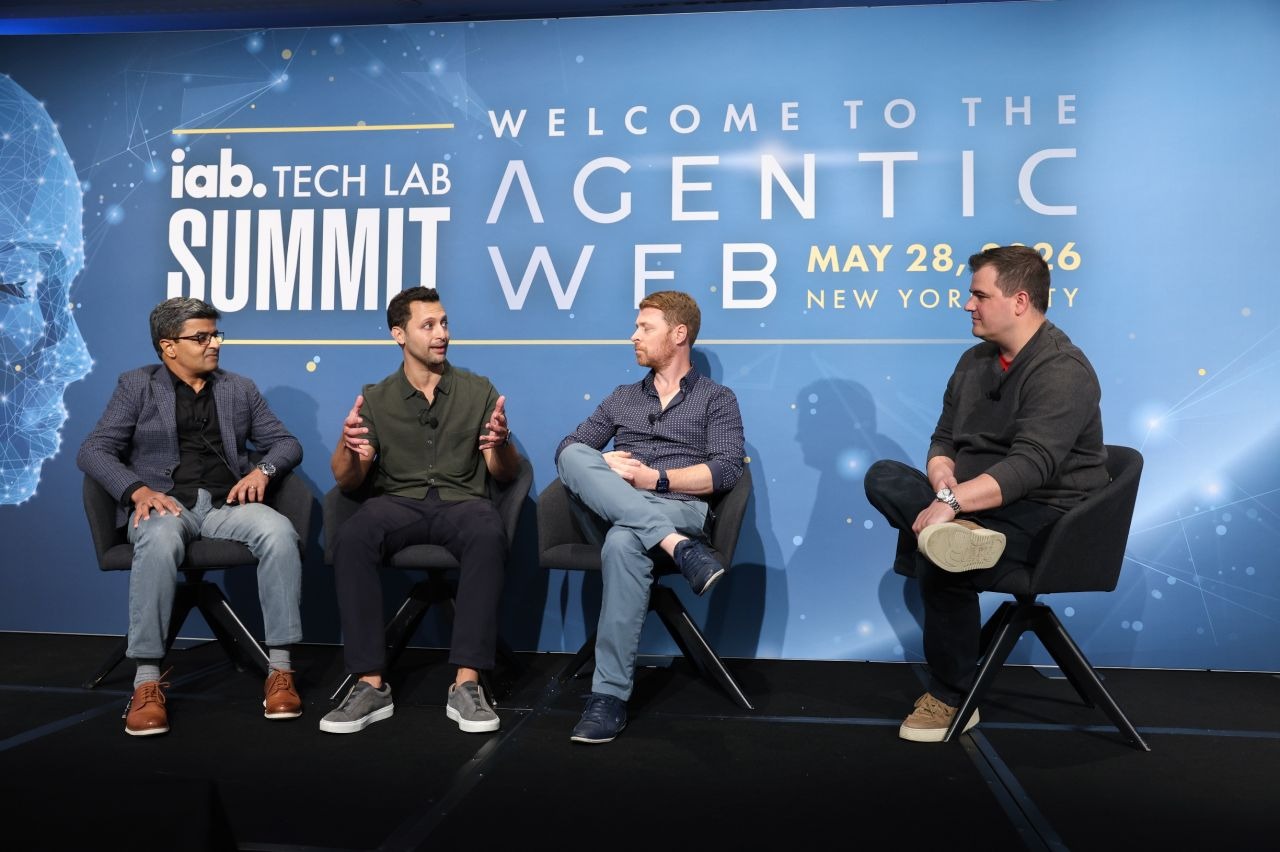
1. Standards as the load-bearing concept
Anthony Katsur framed the day with a single arc: from Turing to the agentic web, the throughline is open infrastructure. Extending programmatic’s philosophy on standards to the agentic layer is the natural move.
The named pieces stacking up:
- AAMP as the agentic protocol layer on top of OpenRTB.
- AdCP as the open standard for agent-to-agent communication, positioned as parallel to OpenRTB rather than a replacement.
- MCP as the standard for agent-to-system context.
- CoMP as the standard for metered, accountable AI content access.
- Cloud deployment patterns for shipping these standards into production environments at scale.
Whether the protocols ship before the platforms route around them is the remaining question.
2. Where in the agentic stack does value land?
This was the most contested thread of the day, and the most useful one for operators trying to plan a roadmap.
Three positions on the same stack:
- The buy-side orthodoxy. The Trade Desk's Eric Bosco and Stagwell's Dru Sil described agentic AI aligned to outcomes, built on high-quality inputs, always under your control.
- The contrarian view. KERV.ai's Marika Roque pushed back. Bidder optimization, SSP tuning, ad serving, and DCO already run in real time. The opportunity for agentic systems sits in the inputs: planning, audience construction, and the brief itself. Roque argues that 15 years of programmatic optimization have already harvested most of the gains available inside the auction.
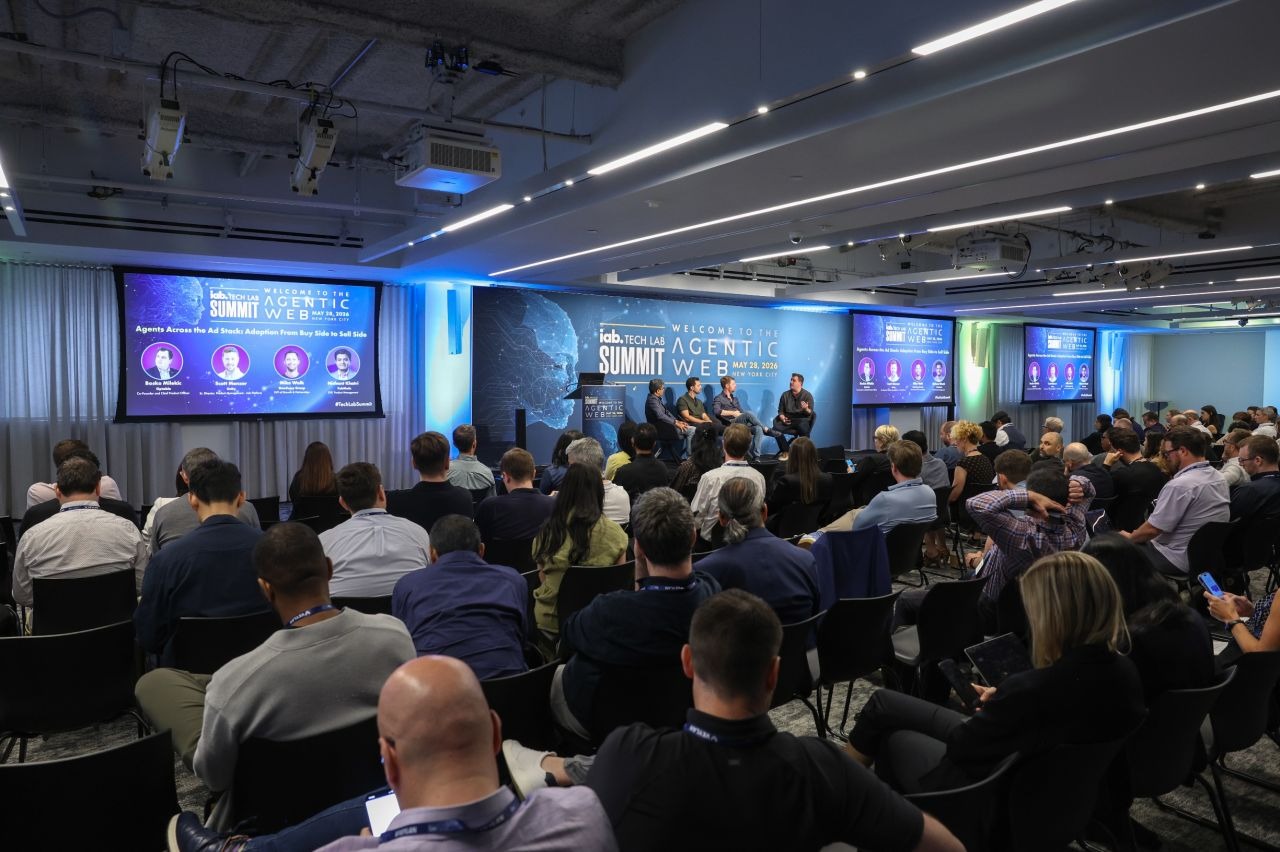
- The cross-stack view. The “Agents Across the Ad Stack” panel, moderated by Optable's Bosko Milekic, made the case that the value looks different at every layer. Mike Wolk (Goodway Group), Nishant Khatri (PubMatic), and Scott Menzer (Unity) weighed in. Goodway is rolling out agentic audience workflows to its buyers. PubMatic is shipping agent-to-agent transaction infrastructure. Unity is putting agents on top of runtime behavioral data from mobile gameplay.
None of these are wrong, but they’re not complete on their own, either. Wolk's framing captures the prerequisite the rest of the day mostly assumed: AI on top of fast, wrong data is still wrong. Meanwhile, demand for agentic media is being shaped by buyers, with most of the supply side still watching from the sidelines.
Keep reading: Get Ready for AI Agents Now, Before Buyer Agents Scale
3. The publisher business model is transitioning in public
Drawing on a network of news organizations, INMA's Gabriel Dorosz painted a picture of traffic disruption from AI-mediated discovery and a business model transition still in progress.
What the transition looks like in practice:
- New monetization primitives. Supertab's CoMP turns AI crawling into a settled commercial transaction, with metering, pricing, and accounting designed for an environment where the page view is no longer the unit of value.
- Premium supply, agentic access. The framing of a publisher operating system that lets buyer agents traverse OpenRTB and AAMP is the most concrete answer in the room to what replaces traffic, clicks, and pages.
- The platform view. Jessica Chan's Perplexity session framed the web as moving from clicks and queries to intelligent discovery.
4. Identity and consent assumptions break when agents act
The identity panel with Will Oatley (Zeroma), Adam Pyett (Ogury), Mathieu Roche (ID5), and Rowena Lam (IAB Tech Lab) took on the question of how identity frameworks need to evolve when an AI agent is the one browsing, searching, and transacting.
Today's identity infrastructure was built to connect a human across devices and channels. The agentic era introduces a new layer on top of that: an agent acting on a user's behalf, with its own session, context, and path to purchase.
The two surfaces under pressure:
- Identity. When an agent acts on behalf of a user, whose identity attaches to the resulting impression? Which framework reconciles AI, online, and offline signals into a coherent path to purchase?
- Consent. The legal architecture of digital privacy assumes a human reads a banner and chooses, but agents do not read banners. The consent surface the industry spent a decade building risks losing its addressee.
LiveRamp's Christian Carlsson framed agentic audiences under AAMP as the reconciliation layer, with transparency and control as the design principles. Whether transparency to a human and transparency to an agent require the same thing is an open question.
5. The control paradox
Operators want control, but the emerging technologies stand to remove it.
Two positions in tension:
- Control as a feature. The Trade Desk and Stagwell sold their session on agents being “always under your control.” Snowflake's activation framing centered the same value. Meta's Artur Souza described the move from scripted responses to context-aware, action-oriented agents, which is, read plainly, a description of moving the human further out of the loop.
- Control as illusion. Mobian's Jonah Goodhart pushed back. In an AI-first world, brands can’t fully control how they appear. Context determines meaning, and the brand is not the author of its own context.
What happens when agents transact with other agents and the human is one step removed from each decision?
The honest answer is that operators can retain control over inputs, objectives, and guardrails, but they may eventually surrender the supervision of moment-to-moment decisions agents make. That trade is the deal of the agentic era.
What didn't get said
There were a few absences worth flagging, because they are the topics the industry will have to address.
- Measurement. How do agent-mediated impressions get measured against agent-mediated outcomes?
- Buy-side economics. When an agency runs an agent on behalf of a brand, who pays for the compute, on what model, and how does that cost compare to the human equivalent it displaces?
- The non-US view. INMA brought a global lens, but the European regulatory reality remained relatively unaddressed.
- Where the hype has outpaced reality. The honest answers about which agent deployments stalled or never delivered against the pitch weren’t discussed, leaving little room for collaborative problem solving to overcome the challenges.
What we took away
Agreeing on standards is an essential step. The harder work, which will decide whether the agentic web pays operators back, lies in audience construction, identity reconciliation across human and agent signals, and commercial primitives like CoMP and AAMP that turn agent activity into accountable transactions.
For the industry, the urgency centers on AdCP, AAMP, MCP, and CoMP shipping in time to matter. For organizations ready to move forward, the work lies in auditing their agent readiness, identifying where agents create real lift today, and building the infrastructure that makes agent-to-agent collaboration possible when it arrives.
Where Optable sat in the conversation
Bosko Milekic moderated “Agents Across the Ad Stack” with Mike Wolk (Goodway Group), Scott Menzer (Unity), and Nishant Khatri (PubMatic). This session discussed where agentic AI is currently creating real value for the buy side, sell side, and platforms.
John Rosendahl and Andy Sharkey led the “Beyond the Hype” breakout on what agents actually do for media buying and selling workflows today. The session was built around the Optable & Digiday State of Agentic Advertising survey, live audience polls on agentic AI, and a demo of Optable's Audience Agent. The structural argument: the hype curve looks different once the technology is sitting in front of you. Audience Agent sessions grew 89% from Q1 to Q2 with the customer count doubling, and Q2 is still in progress.
Both sessions returned to the same question: what actually changes on Monday morning? Audience Agents in the RFP workflow and Sales Agents representing publishers in the ecosystem are how Optable is answering it, creating the foundation for the Agentic Collaboration Marketplace.
If you were at the Summit, we'd love to compare notes. If you missed it, we’re continuing the conversation at Cannes Lion in June.
.png)
AI agents are already reshaping how advertising is bought. Advertisers are deploying them to plan campaigns, evaluate publisher inventory, and negotiate deals—at machine speed and at a scale no human team can match.
This shift is happening inside today’s RFP and direct-sales process, not in some future marketplace. Buyer agents are increasingly determining which publishers are considered, how their audiences are valued, and how quickly deals move. For publishers, the implication is immediate: if your inventory cannot be understood and evaluated by these systems, it risks being overlooked entirely.
Agent readiness is the work of ensuring that doesn’t happen. It is the process of preparing publisher data, audiences, and inventory to be discoverable, interpretable, and competitive in an environment where machines are the first point of evaluation.
There are two reasons to prioritize this work now rather than waiting for the agentic marketplace to mature:
- The return on agent-ready infrastructure shows up in the current RFP cycle, not just in some future quarter when buyer agents become the standard.
- The standards governing agentic advertising are being written right now, and publishers who wait will inherit rules that others have already defined.
See a shift by the next RFP cycle
The work that makes a publisher’s inventory available to a buyer agent has immediate value inside the current direct-sales motion. Agent readiness depends on a handful of foundational assets:
- A unified identity graph
- Audience segments enriched with verified third-party attributes & your own structured first party data
- Inventory packaging that answers what’s available, who you reach, and at what price
Each asset strengthens your next RFP response while preparing your inventory for agentic evaluation. Buyer agents are already querying publisher inventory at machine speed, and sales agents that can directly respond to them are emerging. When that agent-to-agent communication matures, deal cycles condense from weeks of human back-and-forth into minutes of structured exchange between systems.
Signal and audience agents are already running on the publisher side, synthesizing and packaging audience data into outputs that sales and buyer agents can act on.
The payoff will show up within the quarter, long before the agentic marketplace fully develops.
Shape the standards being written today
Agentic advertising only works at scale if buyers and sellers share a common language for agents to discover audiences, negotiate deals, exchange brand safety signals, and enforce publisher-defined rules. Built on MCP, the Ad Context Protocol (AdCP) is defining how agents transact across the advertising ecosystem, and the IAB Tech Lab is running a similar agentic track with their AAMP framework.
What matters to publishers is that open, interoperable standards prevail, and that publisher interests shape the outcome. An interoperable standard gives your premium audiences a path to buyers beyond walled gardens. It lets a buyer agent discover, evaluate, and transact on the value of your inventory directly, at prices that reflect the value of your audience, without routing that value through a closed ecosystem or requiring manual negotiation at every step.
The working groups developing these protocols are open, and they need publisher voices to weigh in. A few ways to engage:
- Join the groups shaping the standards. Organizations like the AgenticAdvertising.org and IAB Tech Lab run open agentic tracks. Membership gets you a seat in the conversations where standards are being defined.
- Assign a data or revenue strategy operator to attend. You don’t need a senior engineer, just someone who understands your inventory well enough to read proposals and respond.
- Submit comments on the decisions that affect your business. Share your opinions on inventory representation, audience description, pricing, brand safety, and consent.
How to become agent-ready
Buyer agents are moving faster than publisher workflows can keep up with. Three operational priorities close that gap:
- Assess honestly. Run a cross-functional audit across data engineering, ad operations, revenue, and legal to map where you stand across the pillars of agent readiness: data, inventory signals, content and context signals, technical infrastructure, and organizational awareness.
- Pilot on a real workflow. Pick one property, audience, or deal type. Configure an agent against that scope, establish a control group, and run it against live direct-sales RFPs over a defined window. Document performance and evaluate how you can move forward.
- Continue shaping the standards. Keep participating in these governance efforts as you run your pilot. The decisions being made in parallel to your work will define the marketplace that emerges.
Agent readiness is the prerequisite for the future of AI-powered media selling and agentic collaboration, and investing in it now benefits your manual and programmatic workflows today.
Start the Audit, Run the Pilot, and Claim Your Sea
Agent readiness is operational work that pays off inside your current workflow and positions your organization for the emerging agentic marketplace. The publishers who start the work now will enter that marketplace with a foundation their competitors are still scrambling to build.
___
This article is originally published on Digital Content Next on May 4, 2026.
Subscribe to our newsletter