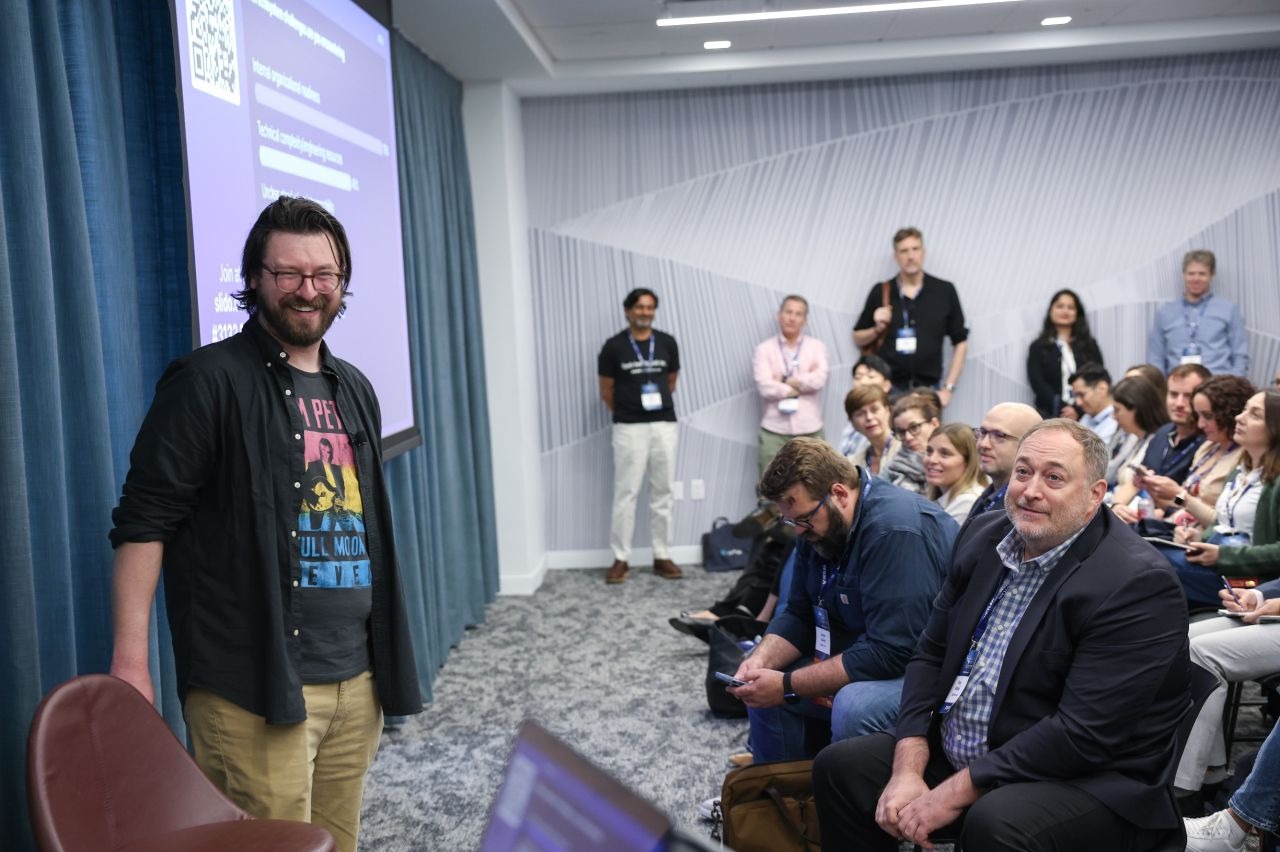
In a live poll during Optable’s Beyond the Hype breakout, 51% of attendees described themselves as cautiously optimistic about agentic advertising. Twenty-eight percent identified as sky-high believers, compared to six percent who called themselves outright skeptics.
That mix was the spirit of the Summit. We all felt the urgency, supported by questions about whether the infrastructure, standards, and playbooks will catch up to the ambition.
The day opened with Tim Berners-Lee and closed with WPP Media. In between, more than 20 sessions argued one point from different angles: the agentic web must be built on shared standards, or it will be built badly. The room mostly agreed, but disagreed on where value lands in the agentic stack, what happens to publisher business models in transition, and whether operators can really control systems designed to act on their behalf.
Here are the five threads that ran through the day, what speakers said about each, and where the harder questions still sit unanswered.
1. Standards as the load-bearing concept
Anthony Katsur framed the day with a single arc: from Turing to the agentic web, the throughline is open infrastructure. Extending programmatic’s philosophy on standards to the agentic layer is the natural move.
The named pieces stacking up:
- AAMP as the agentic protocol layer on top of OpenRTB.
- AdCP as the open standard for agent-to-agent communication, positioned as parallel to OpenRTB rather than a replacement.
- MCP as the standard for agent-to-system context.
- CoMP as the standard for metered, accountable AI content access.
- Cloud deployment patterns for shipping these standards into production environments at scale.
Whether the protocols ship before the platforms route around them is the remaining question.
2. Where in the agentic stack does value land?
This was the most contested thread of the day, and the most useful one for operators trying to plan a roadmap.
Three positions on the same stack:
- The buy-side orthodoxy. The Trade Desk's Eric Bosco and Stagwell's Dru Sil described agentic AI aligned to outcomes, built on high-quality inputs, always under your control.
- The contrarian view. KERV.ai's Marika Roque pushed back. Bidder optimization, SSP tuning, ad serving, and DCO already run in real time. The opportunity for agentic systems sits in the inputs: planning, audience construction, and the brief itself. Roque argues that 15 years of programmatic optimization have already harvested most of the gains available inside the auction.
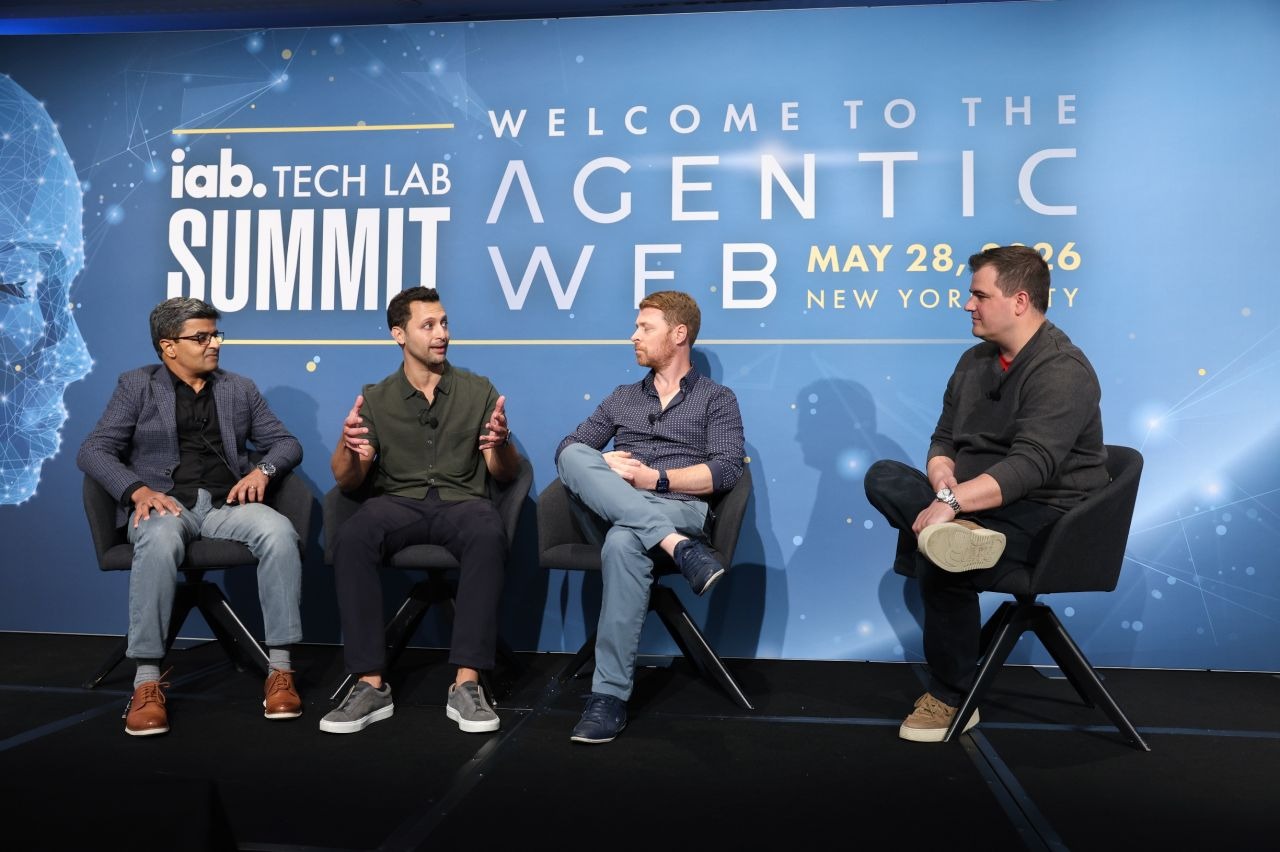
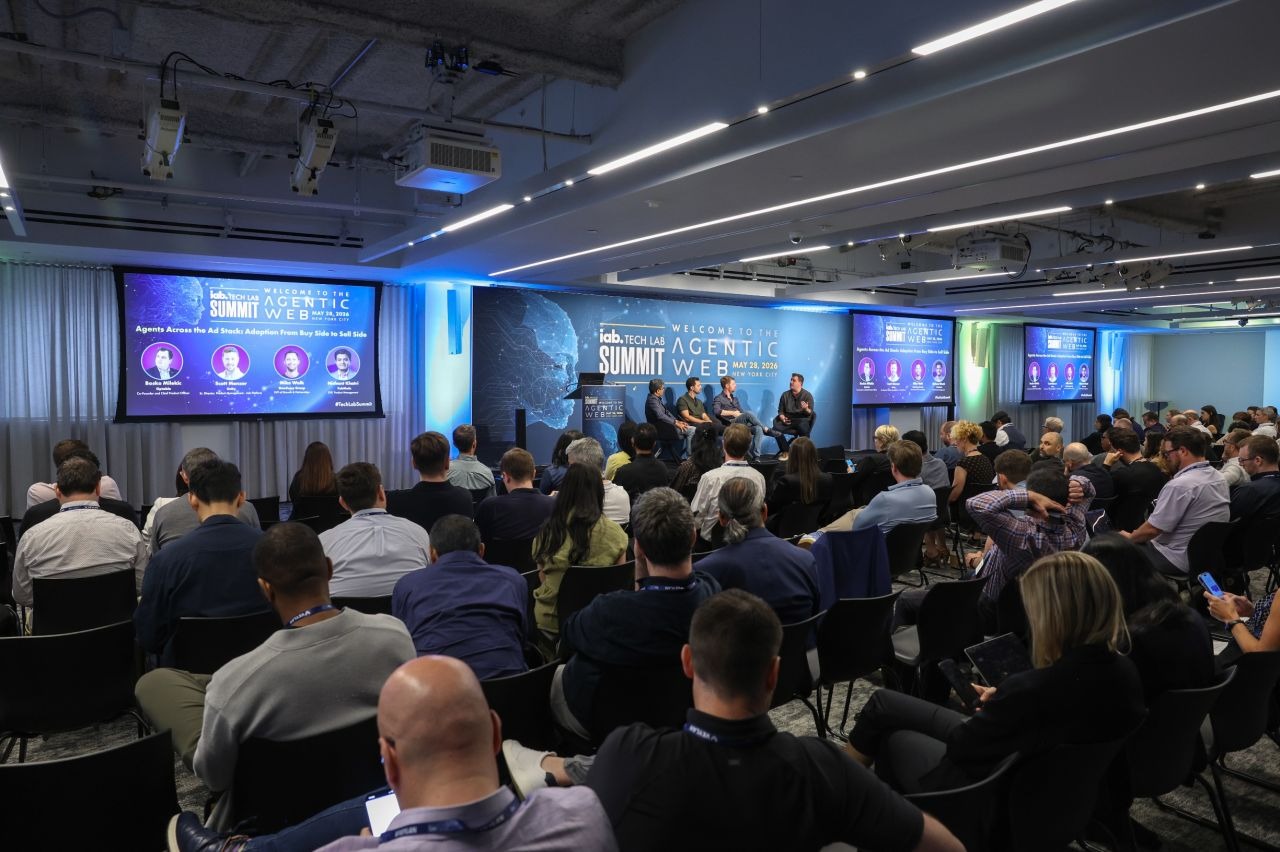
- The cross-stack view. The “Agents Across the Ad Stack” panel, moderated by Optable's Bosko Milekic, made the case that the value looks different at every layer. Mike Wolk (Goodway Group), Nishant Khatri (PubMatic), and Scott Menzer (Unity) weighed in. Goodway is rolling out agentic audience workflows to its buyers. PubMatic is shipping agent-to-agent transaction infrastructure. Unity is putting agents on top of runtime behavioral data from mobile gameplay.
None of these are wrong, but they’re not complete on their own, either. Wolk's framing captures the prerequisite the rest of the day mostly assumed: AI on top of fast, wrong data is still wrong. Meanwhile, demand for agentic media is being shaped by buyers, with most of the supply side still watching from the sidelines.
Keep reading: Get Ready for AI Agents Now, Before Buyer Agents Scale
3. The publisher business model is transitioning in public
Drawing on a network of news organizations, INMA's Gabriel Dorosz painted a picture of traffic disruption from AI-mediated discovery and a business model transition still in progress.
What the transition looks like in practice:
- New monetization primitives. Supertab's CoMP turns AI crawling into a settled commercial transaction, with metering, pricing, and accounting designed for an environment where the page view is no longer the unit of value.
- Premium supply, agentic access. The framing of a publisher operating system that lets buyer agents traverse OpenRTB and AAMP is the most concrete answer in the room to what replaces traffic, clicks, and pages.
- The platform view. Jessica Chan's Perplexity session framed the web as moving from clicks and queries to intelligent discovery.
4. Identity and consent assumptions break when agents act
The identity panel with Will Oatley (Zeroma), Adam Pyett (Ogury), Mathieu Roche (ID5), and Rowena Lam (IAB Tech Lab) took on the question of how identity frameworks need to evolve when an AI agent is the one browsing, searching, and transacting.
Today's identity infrastructure was built to connect a human across devices and channels. The agentic era introduces a new layer on top of that: an agent acting on a user's behalf, with its own session, context, and path to purchase.
The two surfaces under pressure:
- Identity. When an agent acts on behalf of a user, whose identity attaches to the resulting impression? Which framework reconciles AI, online, and offline signals into a coherent path to purchase?
- Consent. The legal architecture of digital privacy assumes a human reads a banner and chooses, but agents do not read banners. The consent surface the industry spent a decade building risks losing its addressee.
LiveRamp's Christian Carlsson framed agentic audiences under AAMP as the reconciliation layer, with transparency and control as the design principles. Whether transparency to a human and transparency to an agent require the same thing is an open question.
5. The control paradox
Operators want control, but the emerging technologies stand to remove it.
Two positions in tension:
- Control as a feature. The Trade Desk and Stagwell sold their session on agents being “always under your control.” Snowflake's activation framing centered the same value. Meta's Artur Souza described the move from scripted responses to context-aware, action-oriented agents, which is, read plainly, a description of moving the human further out of the loop.
- Control as illusion. Mobian's Jonah Goodhart pushed back. In an AI-first world, brands can’t fully control how they appear. Context determines meaning, and the brand is not the author of its own context.
What happens when agents transact with other agents and the human is one step removed from each decision?
The honest answer is that operators can retain control over inputs, objectives, and guardrails, but they may eventually surrender the supervision of moment-to-moment decisions agents make. That trade is the deal of the agentic era.
What didn't get said
There were a few absences worth flagging, because they are the topics the industry will have to address.
- Measurement. How do agent-mediated impressions get measured against agent-mediated outcomes?
- Buy-side economics. When an agency runs an agent on behalf of a brand, who pays for the compute, on what model, and how does that cost compare to the human equivalent it displaces?
- The non-US view. INMA brought a global lens, but the European regulatory reality remained relatively unaddressed.
- Where the hype has outpaced reality. The honest answers about which agent deployments stalled or never delivered against the pitch weren’t discussed, leaving little room for collaborative problem solving to overcome the challenges.
What we took away
Agreeing on standards is an essential step. The harder work, which will decide whether the agentic web pays operators back, lies in audience construction, identity reconciliation across human and agent signals, and commercial primitives like CoMP and AAMP that turn agent activity into accountable transactions.
For the industry, the urgency centers on AdCP, AAMP, MCP, and CoMP shipping in time to matter. For organizations ready to move forward, the work lies in auditing their agent readiness, identifying where agents create real lift today, and building the infrastructure that makes agent-to-agent collaboration possible when it arrives.
Where Optable sat in the conversation
Bosko Milekic moderated “Agents Across the Ad Stack” with Mike Wolk (Goodway Group), Scott Menzer (Unity), and Nishant Khatri (PubMatic). This session discussed where agentic AI is currently creating real value for the buy side, sell side, and platforms.
John Rosendahl and Andy Sharkey led the “Beyond the Hype” breakout on what agents actually do for media buying and selling workflows today. The session was built around the Optable & Digiday State of Agentic Advertising survey, live audience polls on agentic AI, and a demo of Optable's Audience Agent. The structural argument: the hype curve looks different once the technology is sitting in front of you. Audience Agent sessions grew 89% from Q1 to Q2 with the customer count doubling, and Q2 is still in progress.
Both sessions returned to the same question: what actually changes on Monday morning? Audience Agents in the RFP workflow and Sales Agents representing publishers in the ecosystem are how Optable is answering it, creating the foundation for the Agentic Collaboration Marketplace.
If you were at the Summit, we'd love to compare notes. If you missed it, we’re continuing the conversation at Cannes Lion in June.